SHOWCASE
Considering Natural Materials for Your Interior?
Five essential questions to ask before you decide. Wood deepens in color, and stone reacts to water—five ways to embrace these changes as inherent character rather than defects. By Seojin Park, Saeun Jung
Editor Seojin Park, Saeun Jung Courtesy Haning, Shinmyung Flooring, Younglim, Aju Stone & Tile, Carrara
Considering Natural Materials for Your Interior?

The Question for This Issue

Will You Accept the Material's Evolution?

When homes built with natural materials fail to satisfy, the issue is rarely material quality. It is the moment changes are perceived as defects. Oak flooring deepens in color, and natural stone reacts to water and oil.

Before choosing, one must first decide whether to view this transformation as graceful aging or as deterioration. The market answers this question in several distinct directions.

Selecting wood as it is, enhancing wood with performance, replicating its texture, or firing and hardening natural minerals. These are choices rather than a hierarchy. We examine five approaches.
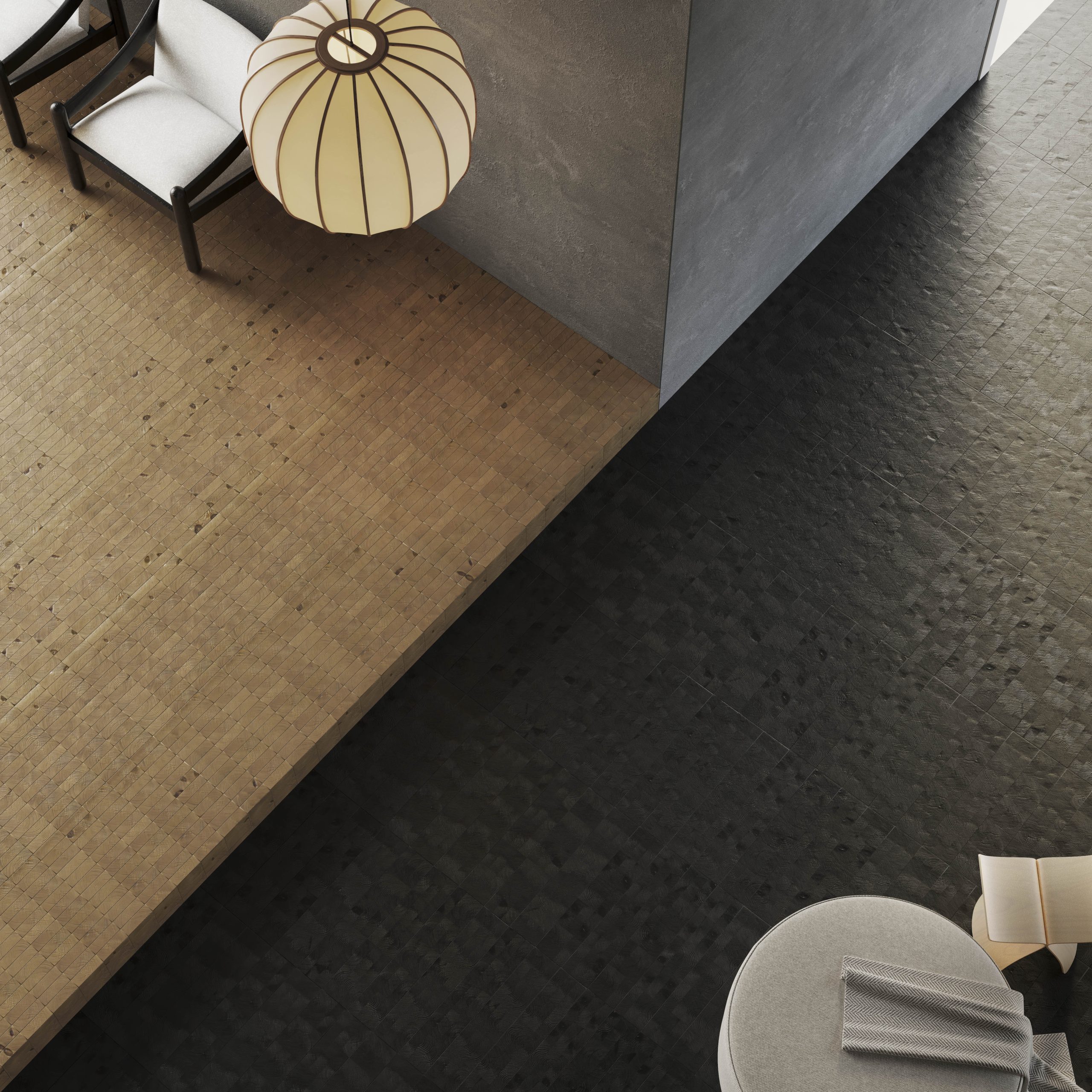
01 Listone Giordano Hardwood Flooring — Dense Growth Rings
DETAIL 01

Warp-resistant timber is determined in the forest

Listone Giordano ㅣ Haning

Korea presents harsh conditions for hardwood flooring. Underfloor heating (Ondol) warms boards from below, while four distinct seasonal humidity shifts expand and contract the wood. In this cycle, boards can warp, gaps can open, and creaking may occur. It is not uncommon for premium hardwood flooring to deteriorate prematurely after installation. Slow-grown timber features dense growth rings; high density naturally prevents warping. This brand utilizes French Oak grown in Burgundy for nearly two centuries, paired with multi-layer backing beneath the hardwood to buffer floor heat and moisture. It has been repeatedly specified for high-end domestic residential projects.
Check at the Booth

Their first domestic exhibition appearance in 14 years. Four new products unveiled in Milan are on display together in one location.
Listone Giordano · Haning (Korea) · Burgundy oak paired with multi-layer backing to withstand underfloor heating and seasonal humidity The caliber of flooring is decided not at the finished product stage, but in the forest where the tree grew.
Read More on Haning · Listone Giordano
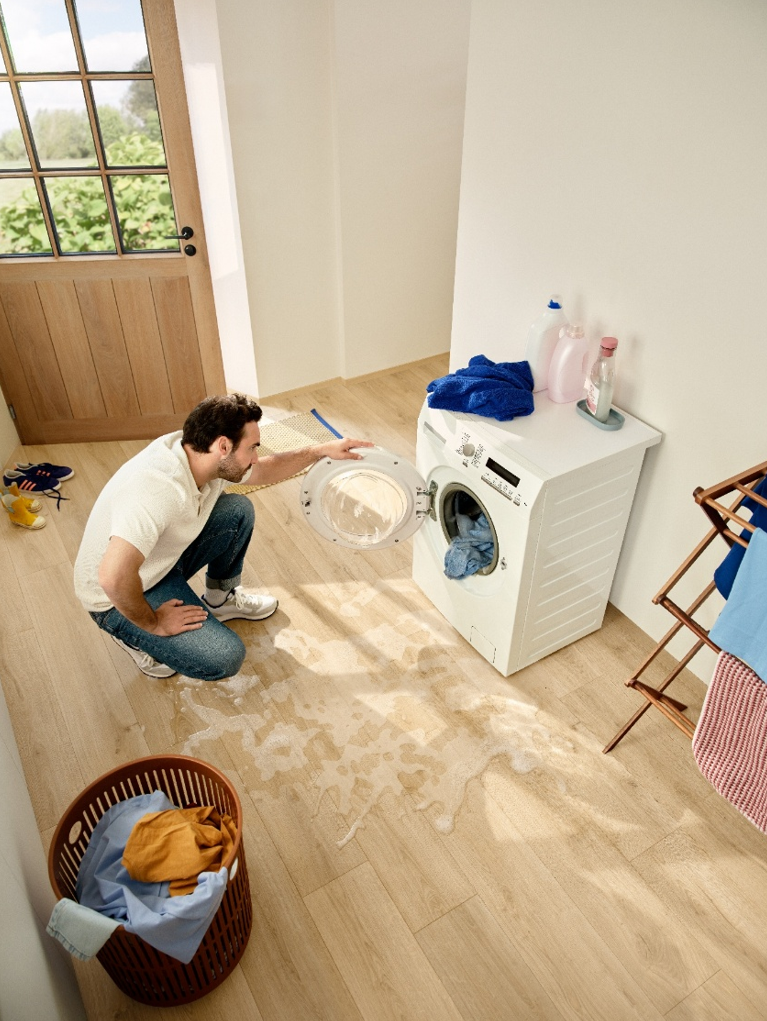
02 Quick-Step Parquet — Water Beading on Flooring Surface
DETAIL 02

Where hardwood used to stop short before wet areas

Parquet ㅣ Quick-Step · Shinmyung Flooring

Many homes feature hardwood living rooms that transition to a different flooring material in the kitchen—or permanently keep a mat in front of the sink. Natural wood is vulnerable to water; moisture causes discoloration and warping, and spot-replacing damaged sections is difficult. Parquet is a line that retains real wood while integrating water resistance. The top layer consists of real wood veneer backed by a high-density core or rubberwood. A protective coating applied to the surface and side joints enables it to withstand standing water for up to 72 hours. The glue-free click-installation system also seals seams against moisture penetration. It can safely be cleaned with a damp mop.
Check at the Booth

Water-pouring demonstration. Observing whether water beads on the surface or absorbs into it is best judged in person.
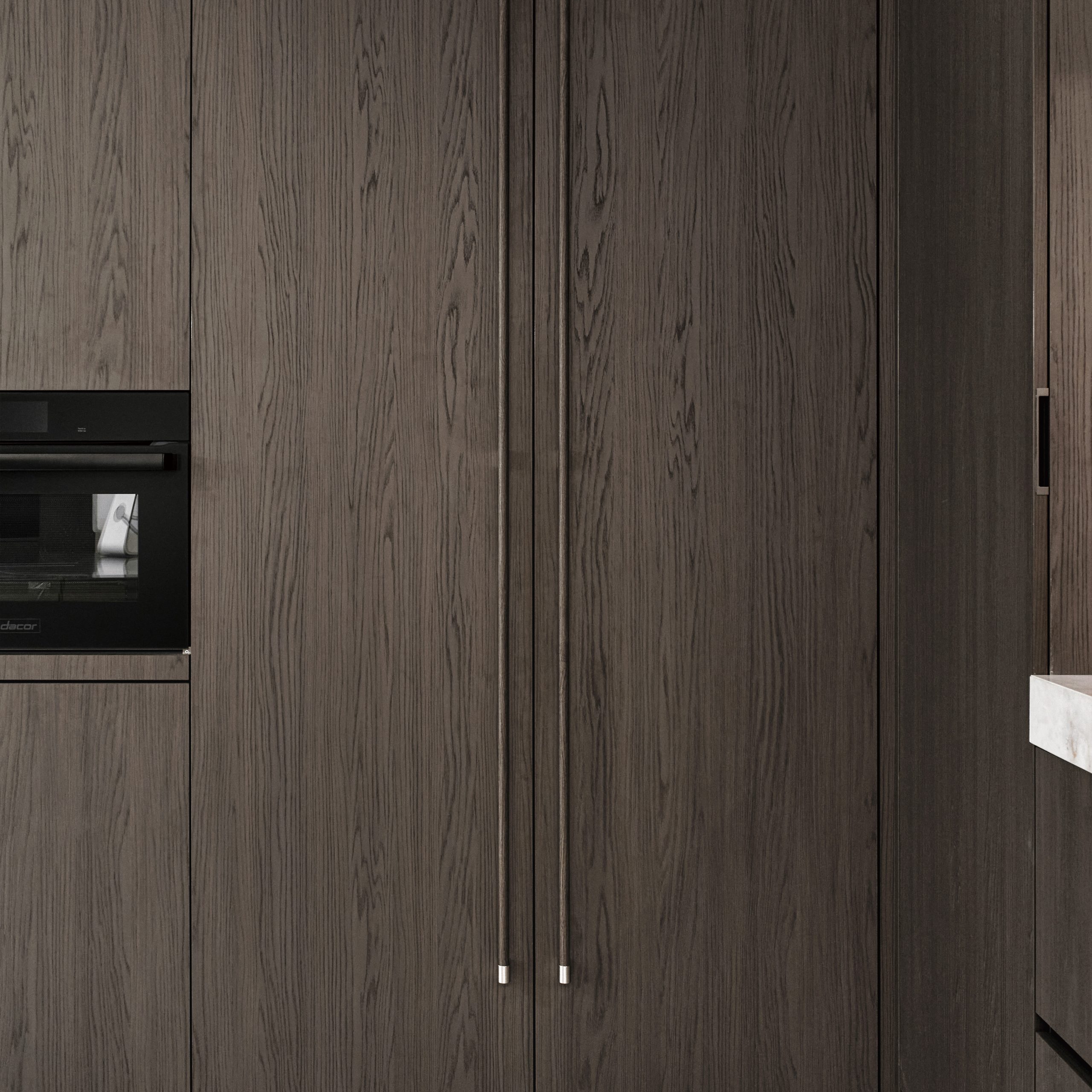
Quick-Step Parquet · Shinmyung Flooring (Korea) · Click-lock flooring adding waterproof performance to real wood veneers Preserving the authentic presence of wood without stopping short at water exposure.
Read More on Shinmyung Flooring
03 Younglim Natura Surface · Forte Door — Replicated Wood Texture
DETAIL 03

The presence of wood, without the maintenance burden

Natura · Forte Door ㅣ Younglim

One may desire the presence of wood without wanting the burden of its maintenance. This is especially true for surfaces touched dozens of times daily, such as doors. Oil-finished solid wood requires periodic reapplication, and high-touch areas discolor prematurely. Natura is a surface material that precisely replicates real wood grain, and Forte is the door line featuring it. It delivers the visual and tactile qualities of wood without the maintenance concerns of warping or discoloration. Rather than abandoning natural materials, this approach narrows down authentic wood placement strictly to where the eye lingers most.
Check at the Booth

Touch the surface with your palm rather than relying on sight alone. The fidelity of reproduced materials is ultimately judged by feel.
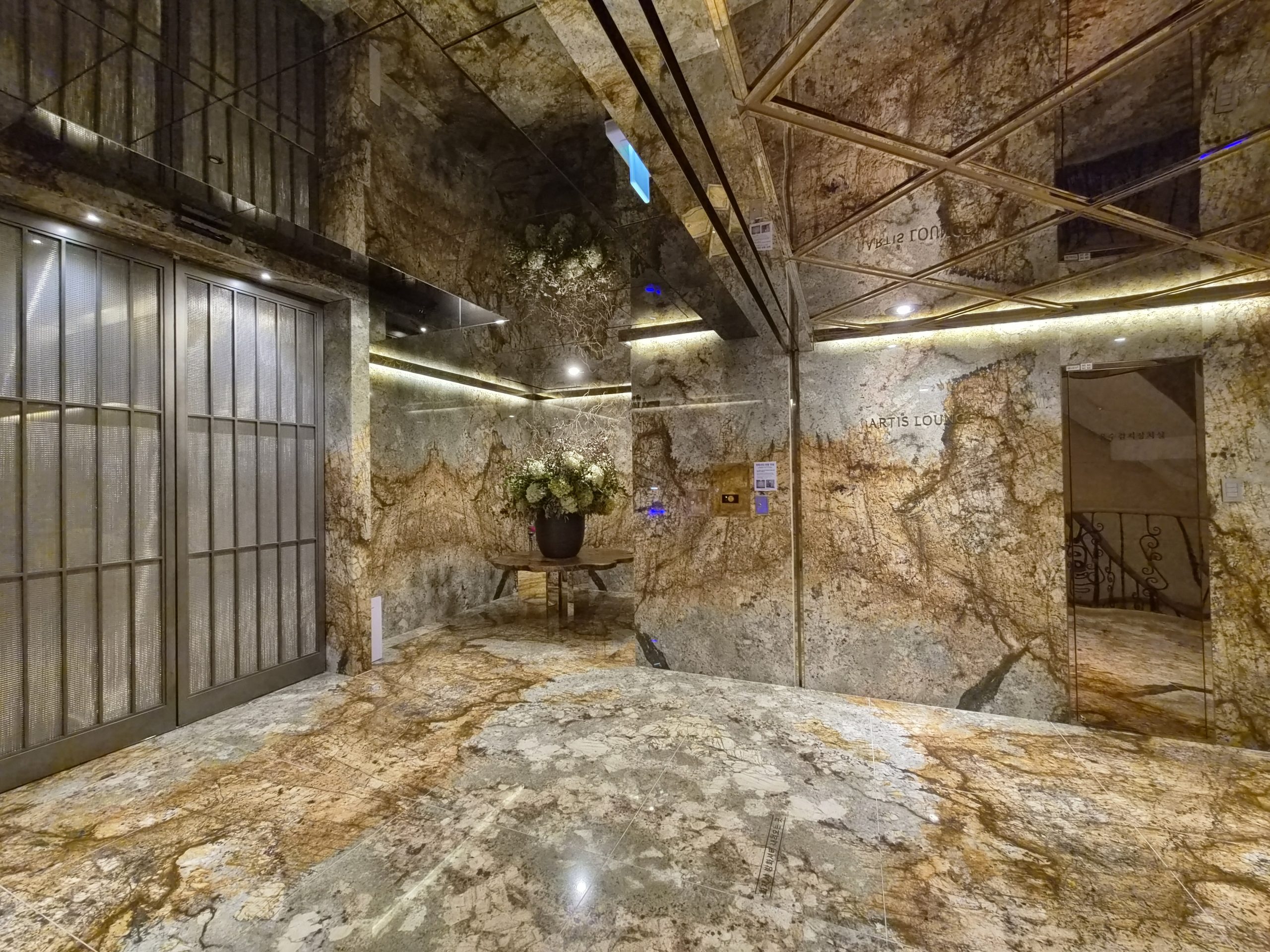
Natura Surface · Forte Door · Younglim · Surface materials translating real wood textures and application doors Narrowing down authentic wood placement strictly to where the eye lingers most.
Read More on Younglim
04 Aju Stone & Tile Natural Marble Book-Match — Symmetrical Feature Wall
DETAIL 04

Connecting stones where no two slabs are alike

Natural Marble Book-Match ㅣ Aju Stone & Tile

No two slabs of natural stone are identical. Consequently, when applied across large surfaces like feature walls, panel breaks remain clearly visible. Unaligned veining can make even costly stone appear chaotic. Book-matching is a technique where slabs cut consecutively from the same block are mirrored side-by-side like an open book, aligning veins into a continuous image. Applied to walls, columns, and staircases, it demands precision from raw stone selection to cutting angles and layout design—a single error cannot be reversed. It is advisable to clarify beforehand whether material supply, fabrication, and installation responsibilities are unified or divided.
Check at the Booth

Observe head-on where symmetry is clear. The sense of continuous veining requires viewing at full scale.
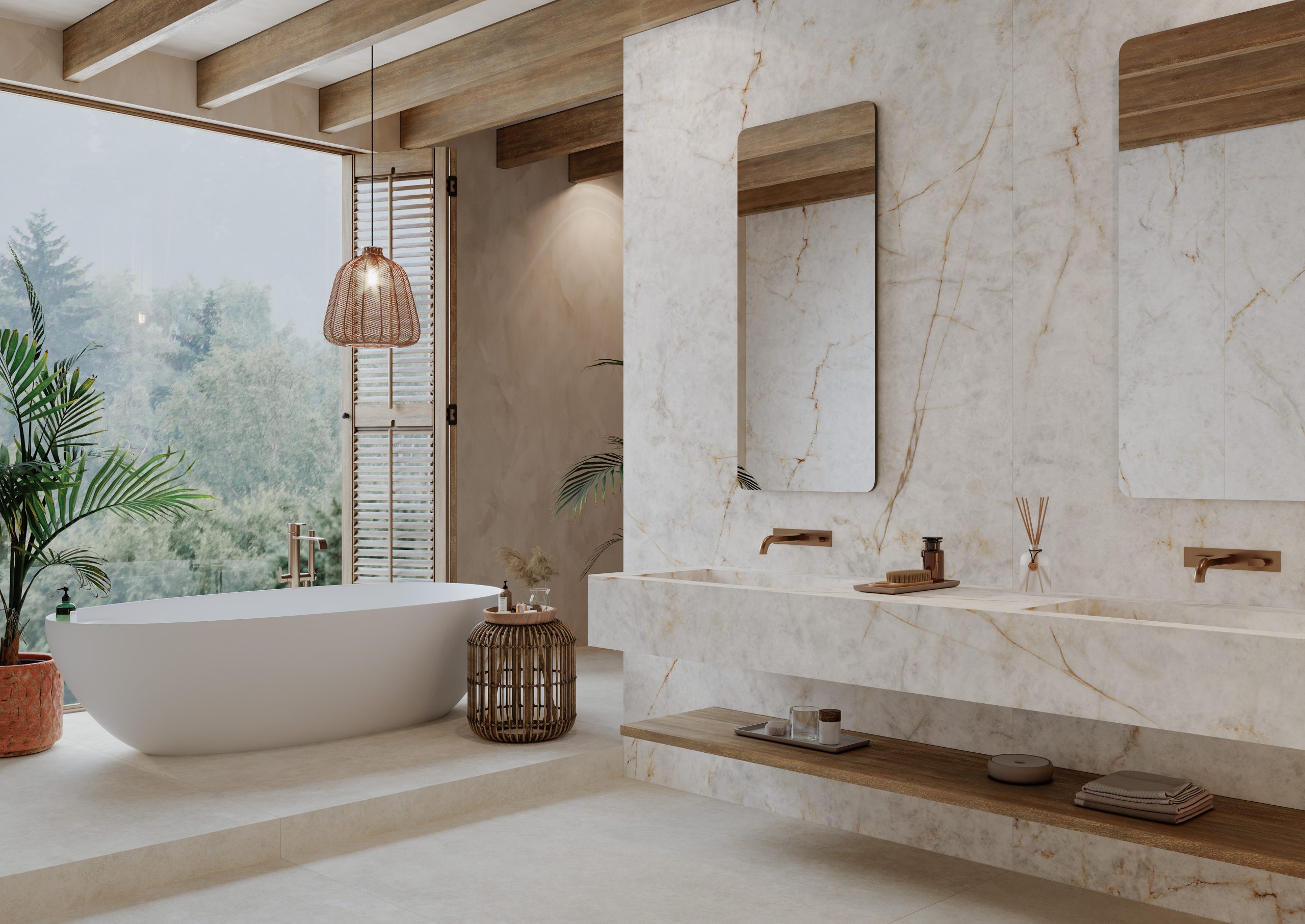
Natural Marble Book-Match · Aju Stone & Tile · Symmetrically cutting matching stone slabs to align veining patterns Unfolding non-identical stones into a single unified canvas.
Read More on Aju Stone & Tile
05 Carrara VENUX Sintered Stone — Large Format Slab Surface
DETAIL 05

Derived from nature, yet immutable stone

VENUX Sintered Stone ㅣ Carrara

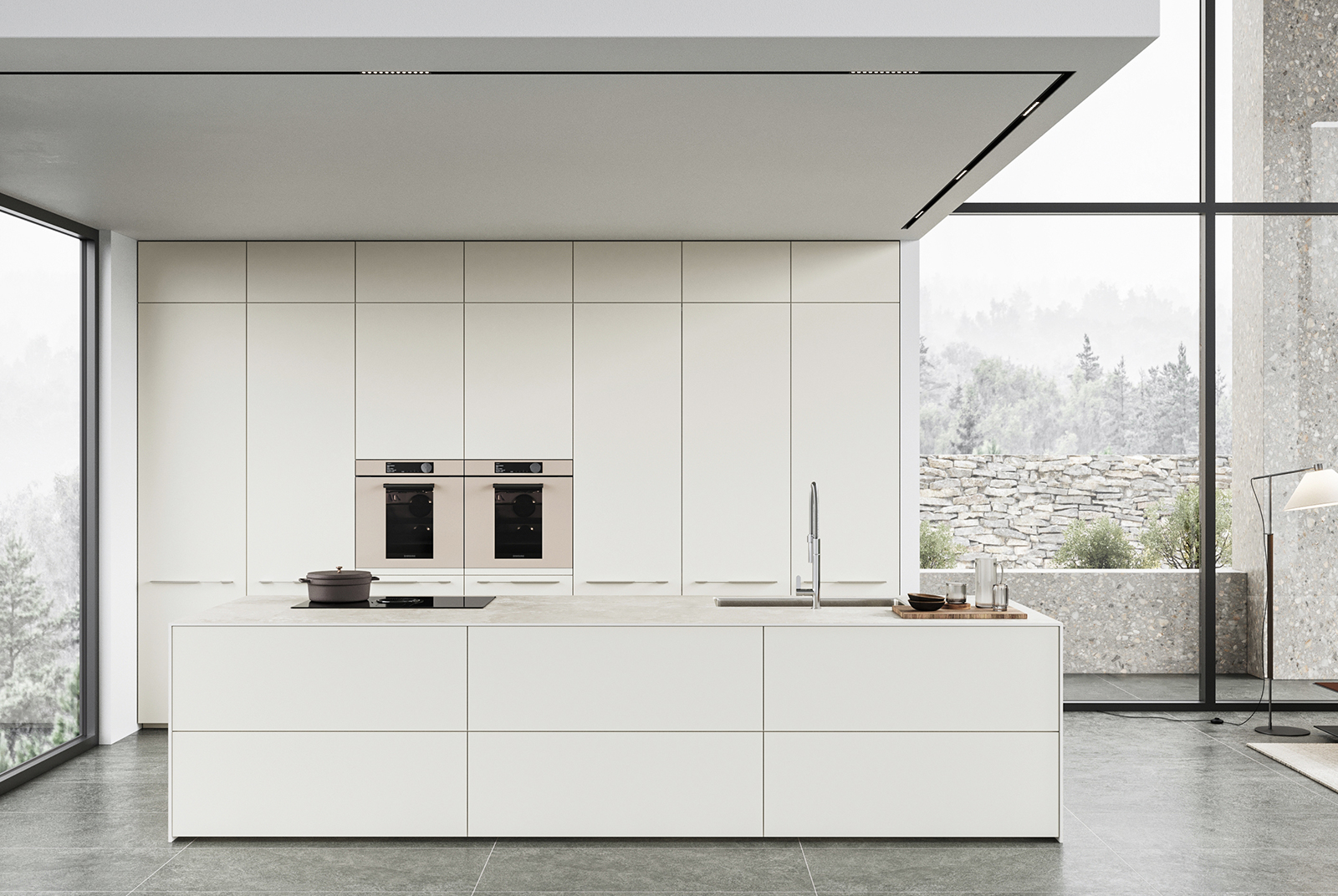
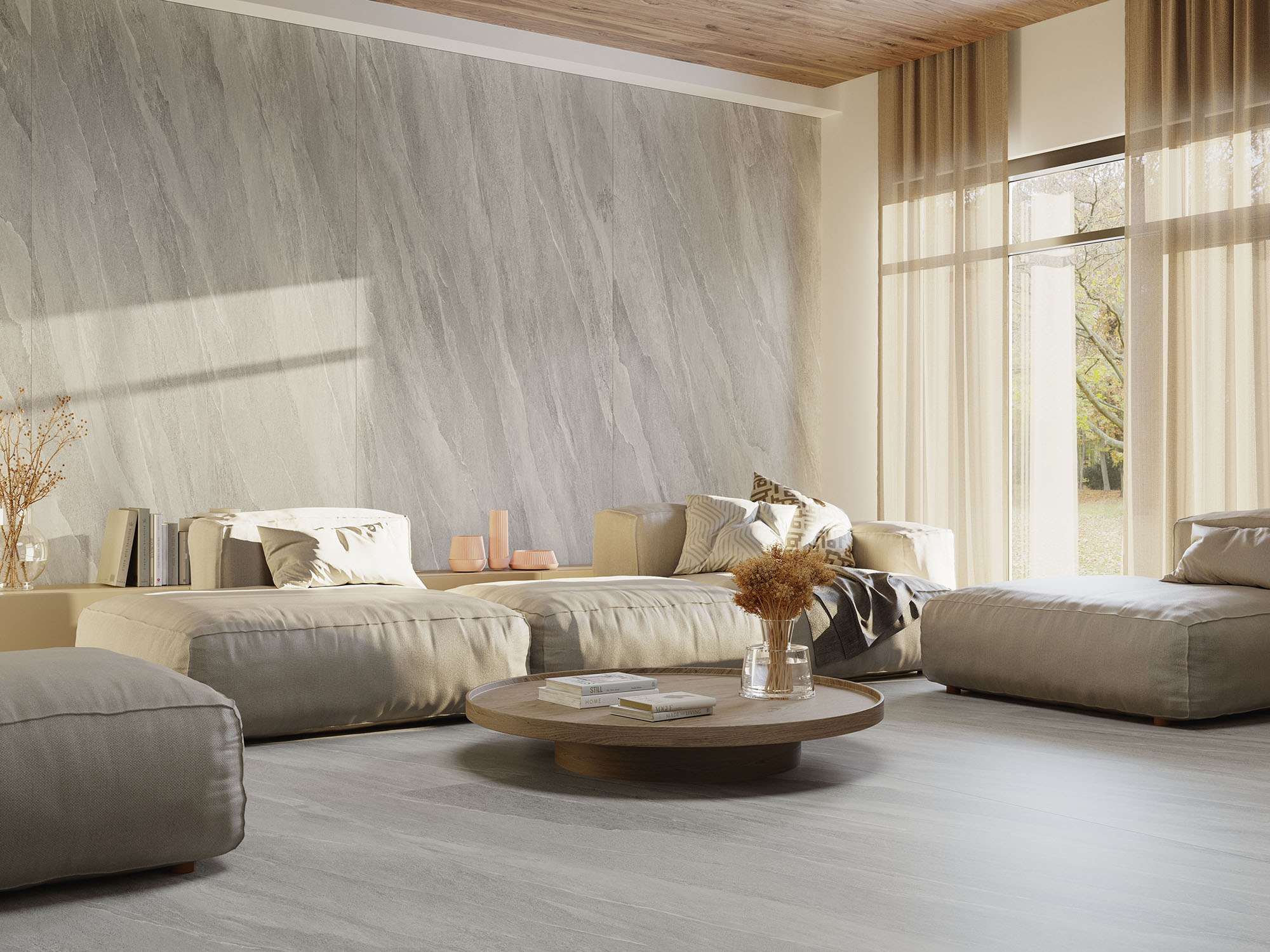
One may desire the beauty of natural stone without wanting to manage its reactivity to water and oil. Wet areas like kitchen countertops and bathrooms require constant water-repellent treatments and re-sealing cycles. Sintered stone is a large-format slab produced by sintering natural minerals under extreme heat and pressure. Though rooted in natural minerals, its firing process transforms its absorption and staining properties. A single large slab can finish walls or floors, serving versatile applications from countertops to bath environments.
Check at the Booth

This product debuts domestically at the August Korea Build exhibition. It marks the first opportunity to view the physical product in Korea.

VENUX Sintered Stone · Carrara · Large-format slabs fired from natural minerals under high temperature and pressure Applying natural-origin materials with composure against water and stains.
Read More on Carrara

Before Selecting Materials

Three Things to Verify

  1. Inquire About Maintenance Schedules in Advance

    Oil reapplication cycles, water-repellent treatment timing, and stain tolerance limits. Learning these after handover is too late. Transparent vendors proactively disclose where a material should not be applied.

  2. Verify Partial Replacement Feasibility

    Whether an individual damaged slab can be replaced years down the line depends heavily on the installation method. This is where the difference between glued and mechanical/click installations becomes crucial.

  3. Examine How Waterproofing Is Achieved

    Waterproof and stain-resistant coatings for flooring have long relied on PFAS, which face regulatory restrictions in the EU and US starting in 2025. If health is a primary driver for choosing natural materials, verifying surface coating compositions is essential.
KOREA BUILD 2026
Experience more information and insights firsthand on-site!
2026 Floorplan keyboard_arrow_right