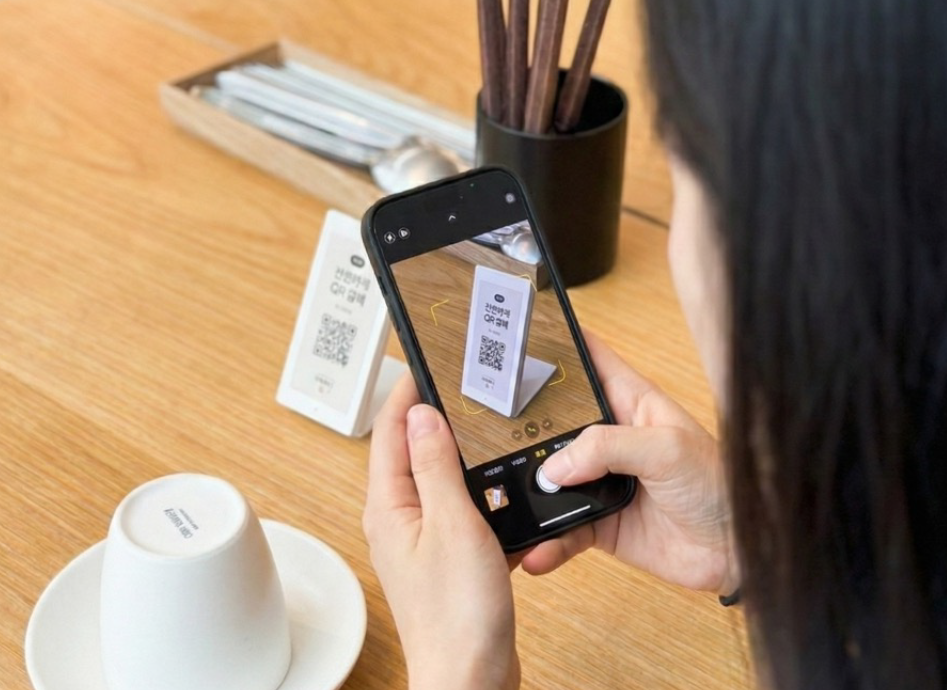
Scanning a QR code at a restaurant or hotel is already familiar. But a QR code printed on paper can be copied with a single photo, and if someone places a different sticker over it, the change can be hard to notice. Arch Seoul moved the QR code onto an e-paper display. The QR on the screen changes at regular intervals, and each time it is scanned, the server verifies whether it is authentic. The way users scan it stays exactly the same.
From Copyable QR Codes to One-Time QR Codes
What Arch Seoul changed was not the form of the QR code, but its nature. A printed QR code continues to display the same information once it is created. It is like copying a key and leaving it in front of the door: if someone takes a photo and uses it somewhere else, it is difficult to stop. Arch Seoul’s dynamic security QR code refreshes at set intervals on an e-paper display, and the moment it is scanned, the server checks whether it was legitimately issued and is still valid. Even if it is copied or shared, it becomes unusable after a certain period of time.
In hotel and resort rooms, a single QR code can connect guests to ordering, payment, and facility use, while access and facility inspections can also be recorded through QR codes valid only at specific times.
Milestones
- 2018Arch Seoul founded
- 2025.04Selected as an Innovative Prototype by the Public Procurement Service · Software accessibility certification obtained
- 2025.06Confirmed rollout across all Hoban Group resort rooms and restaurants · Selected for Shinhan Future’s Lab 11th cohort
- 2025.09Officially registered as an Innovative Product by the Public Procurement Service · Encouragement Award at a global startup expo
- 2025.12Selected as an outstanding company at Shinhan Future’s Lab Demo Day
- 2026.03Selected for the DIPS 1000+ Super Gap Startup Program
- 2026.06Final selection for Samsung Financial Networks C-Lab Outside with Samsung Card
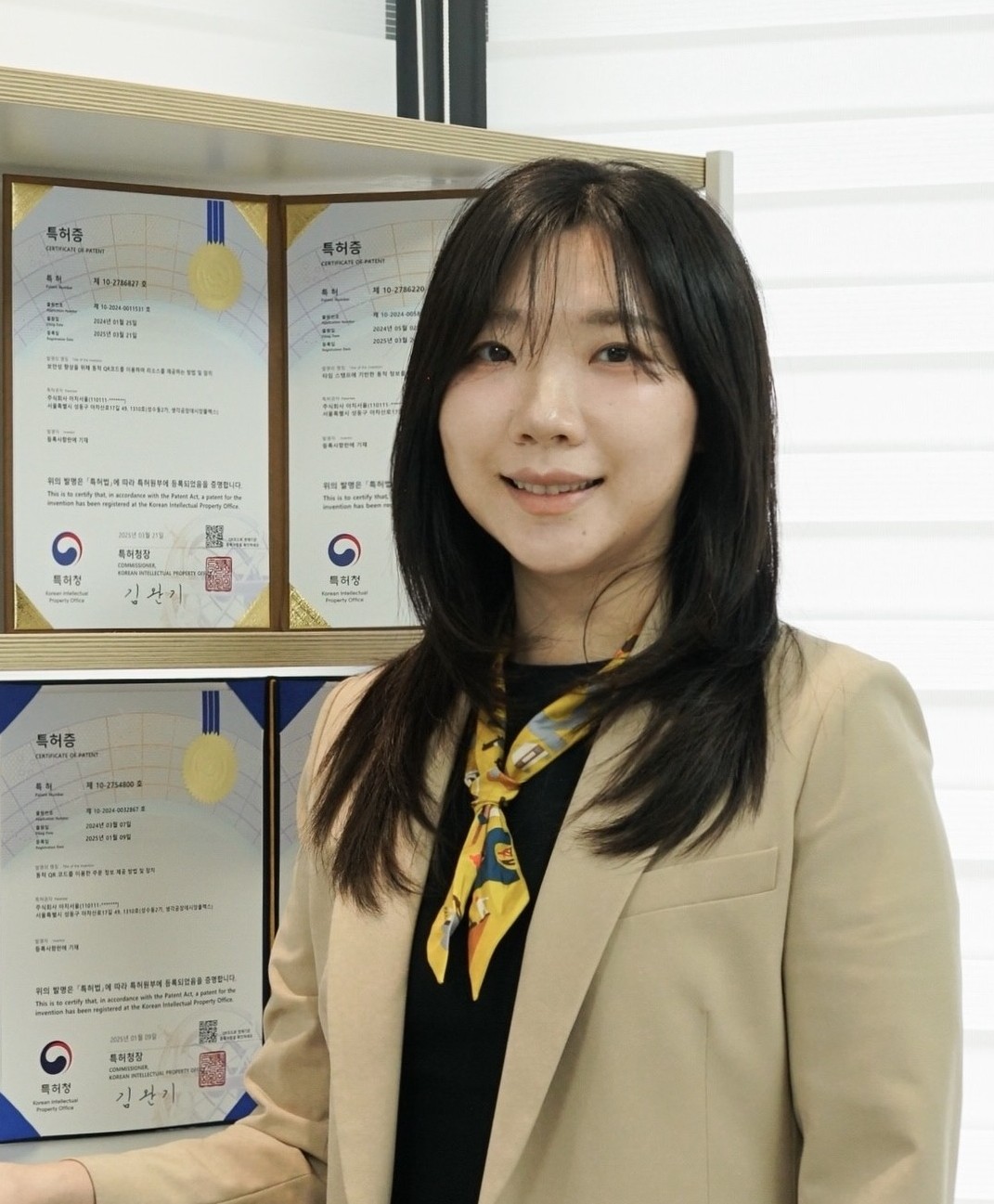
Yu-mi Choi
Co-CEO, Arch Seoul · Founded in 2018
Arch Seoul is led by co-CEOs Se-hwan Park and Yu-mi Choi. Founded on the idea of “connecting spaces and solutions,” the company began with a craft magazine and offline market before identifying the security weaknesses of printed QR codes and shifting into e-paper-based dynamic security QR technology. It is now expanding from food and beverage and hospitality into public-sector and financial applications.
archseoul.com →The company began with a craft magazine and has since evolved into security QR technology. How did that transformation happen?
Arch Seoul began with the idea of “connecting spaces and solutions.” At first, we launched a craft magazine called “Crafts” to introduce more people to good craftwork and the stories of the artists behind it. Later, while operating a service called Gongppu Market that made use of offline spaces run by small business owners, we realized that those spaces needed more than content and products. They also needed technology that could make ordering, payment, and store operations more efficient.
We became particularly interested in the vulnerability of widely used printed QR codes to copying, tampering, and external sharing. To solve that problem, we shifted into a digital security QR business that changes the QR code itself rather than leaving it fixed. The form of our business has changed several times, but our way of working has remained the same from the beginning: listening to people on site and finding problems that have not yet been solved.
How is a QR code printed on paper different from one that changes on an e-paper display?
A QR code printed on paper is similar to making a copy of a key and leaving it in front of the door. Once created, the same information remains exposed, so if someone photographs or copies it and uses it elsewhere, there is little that can be done to stop them. Even when a malicious sticker containing a fake URL is placed over the original QR code — a form of “quishing” — users have difficulty distinguishing the fake by sight.
Our dynamic security QR, by contrast, works like a one-time access pass whose password changes at regular intervals. The QR code on the display keeps refreshing, and when the user scans it, the server checks whether it was legitimately issued and is still valid. Even if it is photographed or shared externally, it becomes unusable after a set period of time.
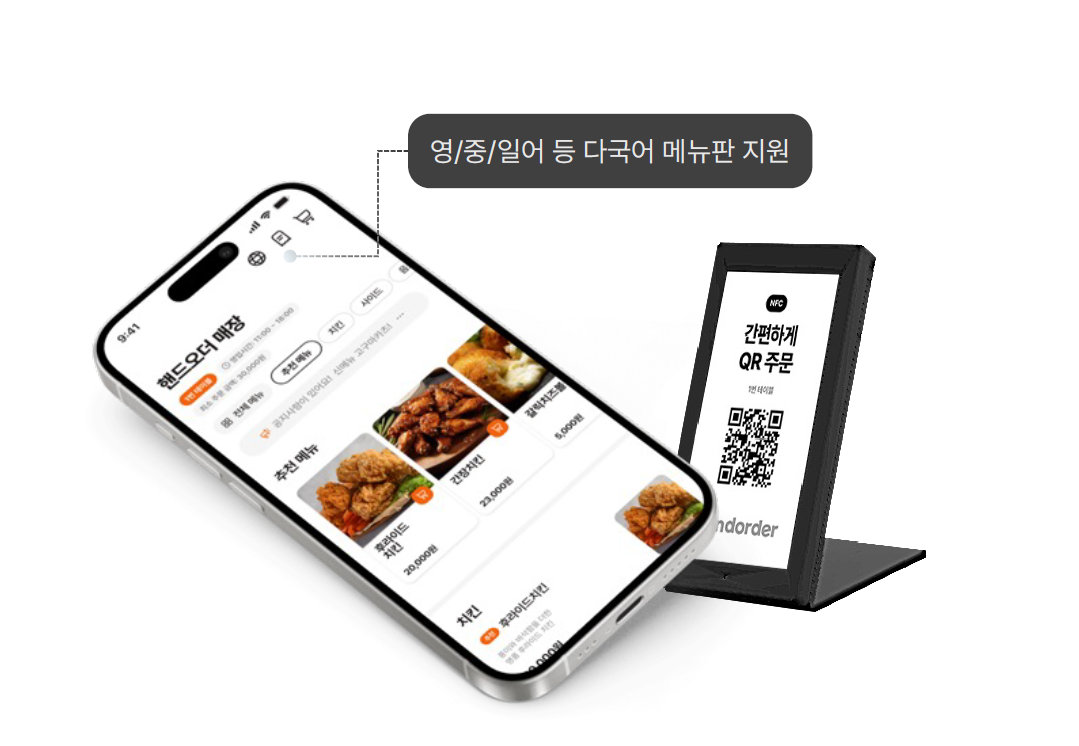
Customers scan the QR code at their table and complete everything from ordering to payment in one flow. Menus in English, Chinese, and Japanese also make it easier to serve international guests.
What changes when the system is applied in hotels and resorts?
Traditionally, hotel and resort guests often had to call the front desk directly to use room service or other facilities, while staff manually recorded and processed requests. Access authentication and facility inspections were also commonly documented by hand.
With Arch Seoul’s security QR, guests can simply scan the QR code installed in their room to view menus, place orders, make payments, and access facilities in one process. For access control and facility management, staff can also use QR codes valid only for specific times and dates to record inspection histories accurately. Guests receive services more quickly and conveniently, while operators can reduce repetitive customer service and manual administrative work, improving both operational efficiency and ease of management.
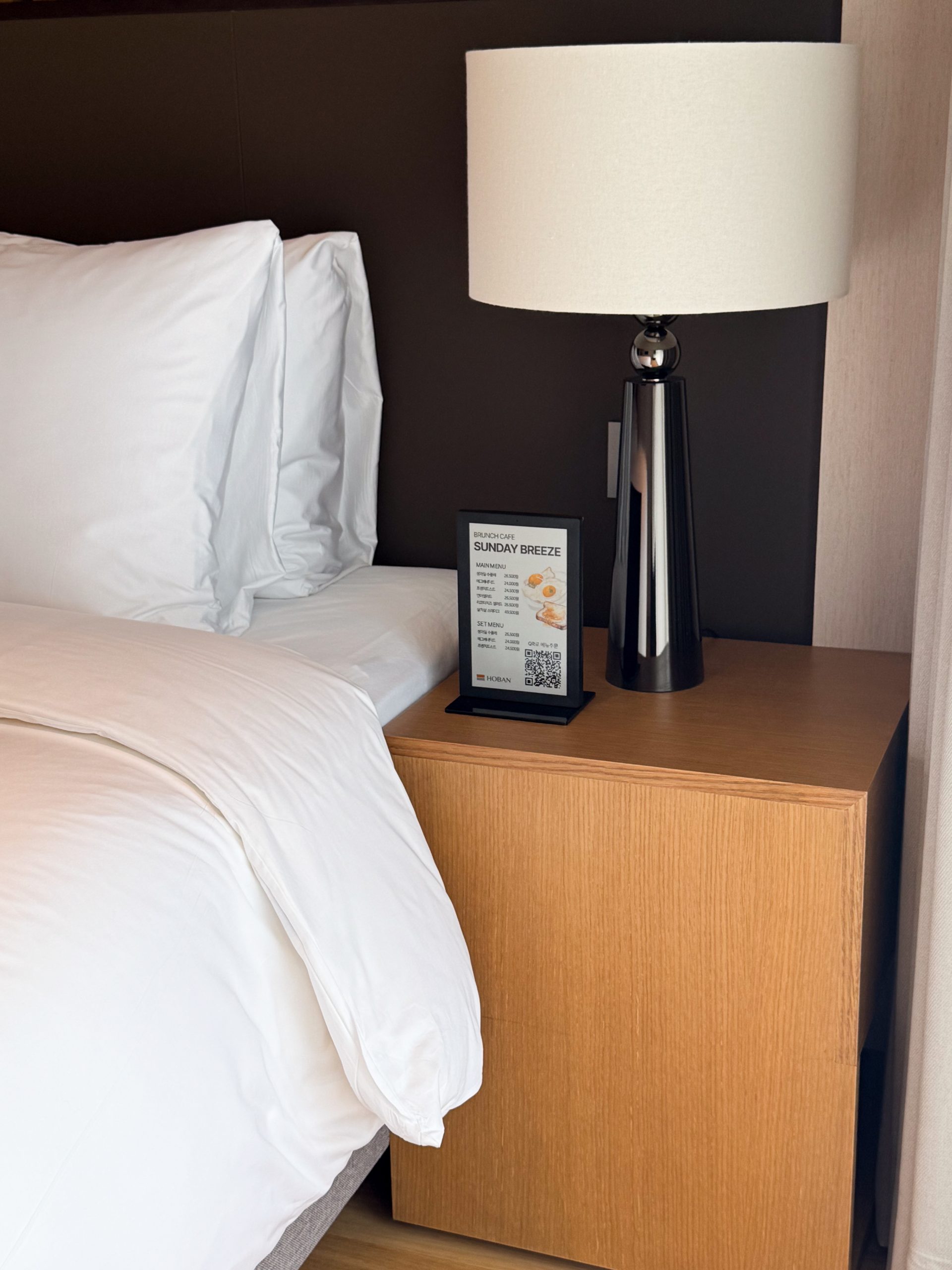
A security QR code placed beside the bed in a hotel room. Guests can browse the room-service menu, order, and pay directly.
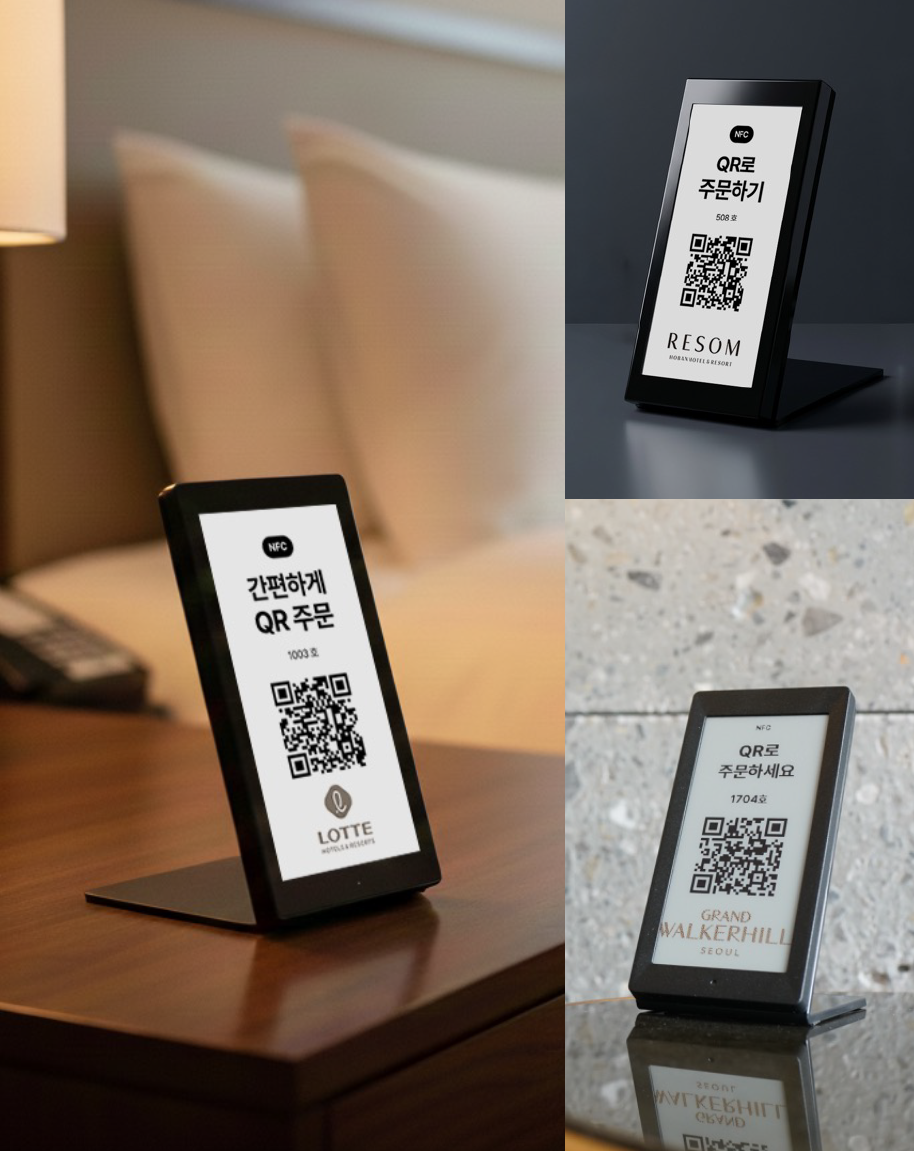
Five-star hotels in Korea, including Resom, Lotte, and Walkerhill, have adopted security QR-based room-service and concierge systems.
What direction do you see Arch Seoul taking next?
We are currently expanding from ordering and payment environments in food and beverage businesses and hotel and resort rooms. This year, our product was also recognized as an Innovative Product by the Public Procurement Service, allowing it to be used as an authenticated QR solution in a variety of public-sector applications.
We want to expand the security QR beyond simple ordering and payment into integrated infrastructure for offline spaces across many industries. We plan to extend its use to public-facility authentication, multilingual ordering and payment, transportation and tourism services, QR payment infrastructure for financial companies, and global markets.
You must have learned a great deal from applying the technology in real environments. What did that experience give you?
The biggest benefit was gaining the opportunity to test the technology in an actual hotel and resort business environment. Rather than remaining at the idea or prototype stage, we installed the solution in rooms at Hoban Group’s Jecheon resort and were able to observe the guest experience and understand the operator’s requirements directly.
Based on those results, we are building a standard model that can be applied to other hotels and accommodation facilities, while continuing to collaborate on further rollouts and broader applications across Hoban Group properties. Going forward, we also plan to identify and discuss use cases for security QR technology across other Hoban Group business areas, including construction sites, residential spaces, and facility management.
Looking five years ahead, what do you hope Arch Seoul will become?
Arch Seoul aims to grow into a global security infrastructure company that turns “every QR code into a secure QR code.” Our goal is for security QR technology to become not something used only in specific industries, but a standard QR format that people can trust across ordering, payment, access control, facility management, and many other applications.
Five years from now, we hope to create an environment where users can scan a QR code anywhere without having to worry about whether it is authentic or safe.