It Is Not a Finish. It Is Building Equipment.
Conventional exterior materials and curtain walls have focused on separate functions such as finishing, daylighting, and insulation. Each system is designed and calculated independently, then brought together as one building envelope. Because the work is divided by trade, labor, materials, and operating costs are often duplicated across multiple scopes. Until now, that has largely been unavoidable.
Bae-won Ko, a U.S.-licensed architect and sustainable building specialist (NCARB · LEED AP), looked closely at this problem. While conventional envelope solutions focused on finishing, daylighting, and insulation, he saw the building envelope as a platform. What if a single wall could generate energy, conserve it, ventilate the space, and control the indoor environment — and arrive from the factory as a module that only needed to be installed on site? That idea led to the development of a modular smart integrated building envelope system.
A Modular Wall for Everyone, MODU WALLS
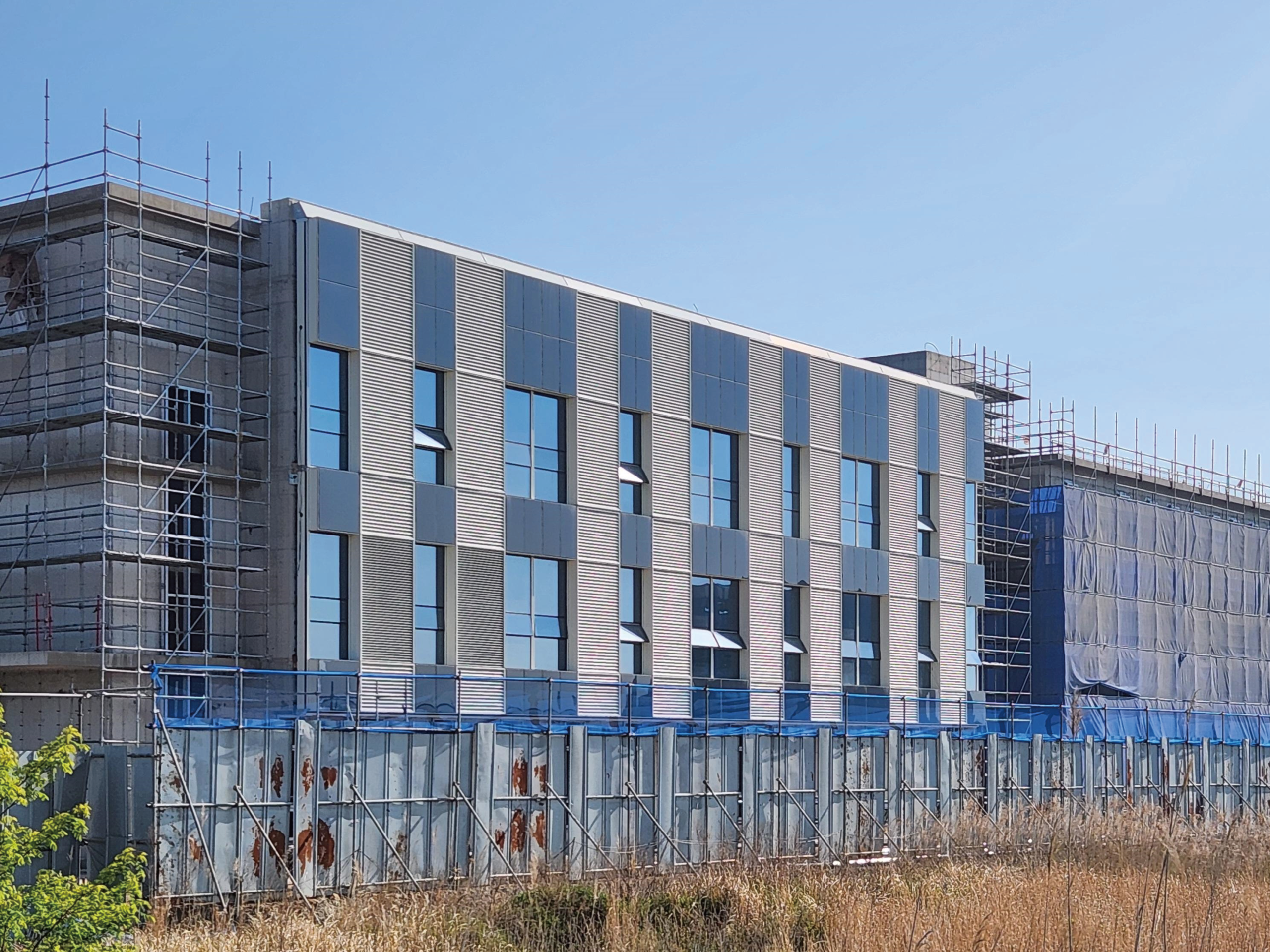
The system combines insulation, building-integrated photovoltaics (BIPV), Low-E triple-glazed windows, an air-source heat pump, heat-recovery ventilation, and an indoor environmental controller in a single module. Factory-built wall units are delivered to the site for installation and assembly. The result goes beyond shorter construction time and lower costs — the exterior wall itself becomes equipment that generates and manages energy.
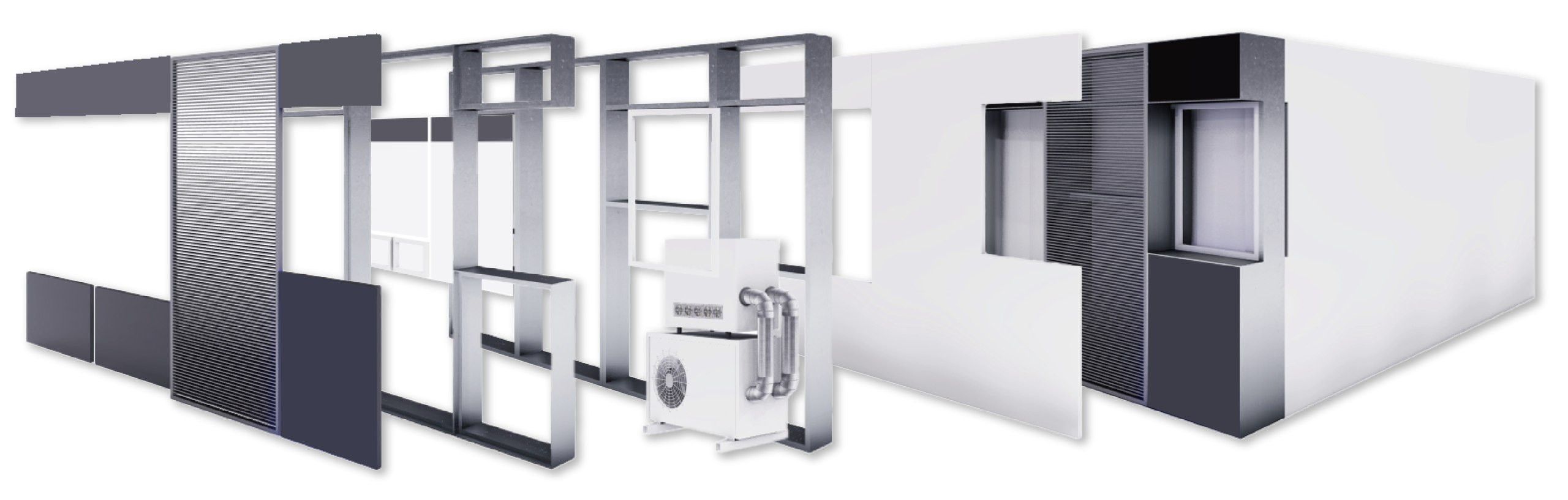
IUES module configuration. Insulation, solar power, triple glazing, heat pump, heat-recovery ventilation, and indoor environmental control are integrated into a single building envelope.
Source · Integra D&C
In an actual exterior-wall installation, the system demonstrated a 15% improvement in solar power generation efficiency and a cooling coefficient of performance (COP) of 3.4. It has emerged as a zero-energy solution that reduces energy use by 32% while cutting costs by around 30%.
Better Buildings That Save Both Energy and Cost
Major contractors are constantly under pressure to reduce costs and shorten construction schedules. In that sense, it is hardly surprising that Integra D&C's solution — which addresses both at once — received strong recognition at the Hoban Innovation Technology Competition hosted by Hoban Construction. Through the competition, the company had an opportunity to evaluate its technology from the perspective of a major contractor and revisit its construction process and maintenance model. It also examined practical issues encountered on real jobsites, from cost structures to subcontractor systems, while gathering feedback from occupants to further develop the product.
The system also contributes to construction that is better for the planet. The climate crisis cannot be addressed quickly enough by improving one process or one material at a time. As zero-energy and low-carbon construction become global priorities, the industry needs more innovative solutions. Integra D&C offers one example: taking what already exists, looking at it from a new perspective, and putting the pieces back together in a different way.

Bae-won Ko
CEO, Integra D&C
Ko is an architectural professional who built his expertise in sustainable building technologies and systems in the U.S. market. He holds U.S. architectural credentials (NCARB) as well as LEED AP and WELL AP certifications, and leads R&D and commercialization in zero-energy buildings, green remodeling, modular envelopes, and construction carbon management. After seeing exterior finishes, windows, and building systems operate as separate trades, he founded Integra D&C with the belief that integrating them into a single building envelope could accelerate carbon neutrality in architecture.
integradnc.com →Was there a particular observation that led you to develop an integrated building envelope system?
At discussions around zero-energy buildings, I repeatedly saw exterior finishes, windows, mechanical systems, ventilation, and solar power handled as separate trades with separate responsibilities. A building's energy performance is largely determined by its envelope, yet the envelope was often treated mainly as a matter of finishes and windows. I believed that if we could integrate all of these functions into a single product that could be installed directly on site, we could accelerate the transition toward carbon-neutral buildings.
What was the biggest challenge when you first entered the construction field?
The hardest lesson was that saying "the technology is good" is not enough to move a construction site. Safety, schedule, defects, regulations, and maintenance responsibility are all interconnected, so references and verification procedures matter. That is why we approached IUES not as a simple idea, but as a system that had to prove both performance and constructability through government-funded R&D, industry-academia-research collaboration, test-bed verification, and actual exterior-wall installations.
Where do you see the greater opportunity: new construction or remodeling?
Both markets are important, but in the short term I see greater opportunity in green remodeling. New construction has the advantage of integrating the envelope and building systems from the design stage, but aging public buildings, schools, and apartment complexes already face strong pressure to improve energy performance, often under tight construction schedules. Because IUES uses factory-built modules that can be installed quickly on site, it can replace existing envelopes efficiently while improving energy performance. In school remodeling, for example, where construction must often be completed during vacation periods, we can offer shorter schedules, fewer disruptions, and better energy performance at the same time.
What advice would you give to younger entrepreneurs considering a startup in construction or architecture?
A construction or architecture startup should not simply create a "useful feature." It has to create a change that the jobsite can actually take responsibility for. If you are prepared to solve the issues of regulations, construction processes, defects, and maintenance together, it is absolutely a market worth taking on.