Preparing a carbon emissions report is not as simple as it sounds. Data pours in from headquarters, branch offices, and dozens of jobsites, each in a different format. It all has to be collected, standardized, and then converted into emissions figures. Construction makes the task even more complicated. The moment a building is completed, responsibility shifts from the contractor to the operator — and the chain of carbon emissions data is often broken along with it.
A 'System' That Brings the Numbers Together
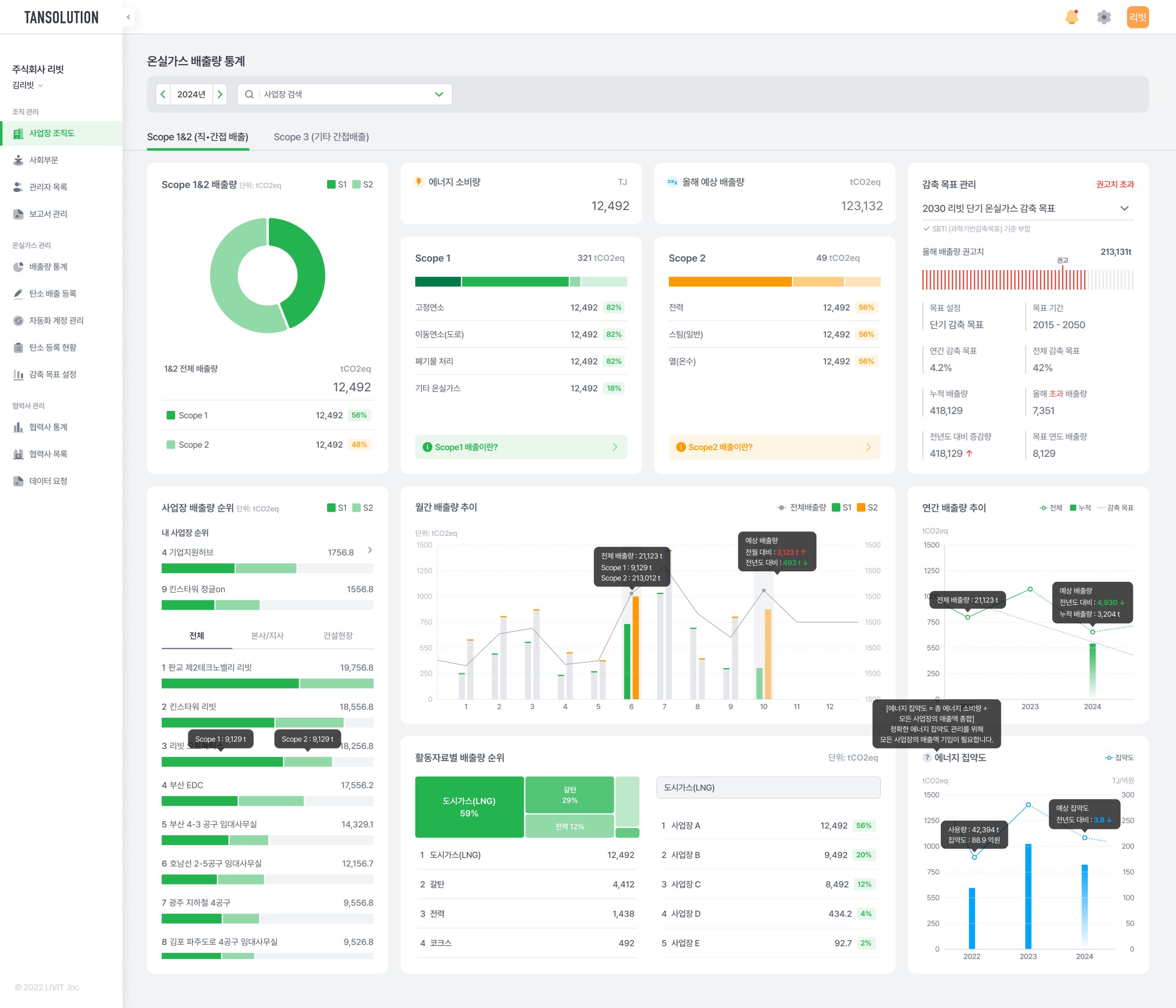
LIVIT's answer was to bring these scattered processes into a single system. With TANSOLUTION, once a jobsite uploads its activity data, the appropriate emission factors are automatically applied, emissions are calculated, and a report is generated. It is a kind of 'carbon accounting solution' that uses AI to streamline management and helps turn emissions reductions into financial value.
The system identifies each business site, assigns administrators, and automates repetitive data entry. Technical terms such as 'stationary combustion' and 'mobile combustion' are translated into more intuitive language such as 'building or factory' and 'company-owned vehicle,' allowing even employees new to greenhouse gas accounting to follow the process. Companies can set the level of reporting they need according to Scope 1, 2, and 3 emissions, and reports are automatically generated to match, reducing excessive paperwork.
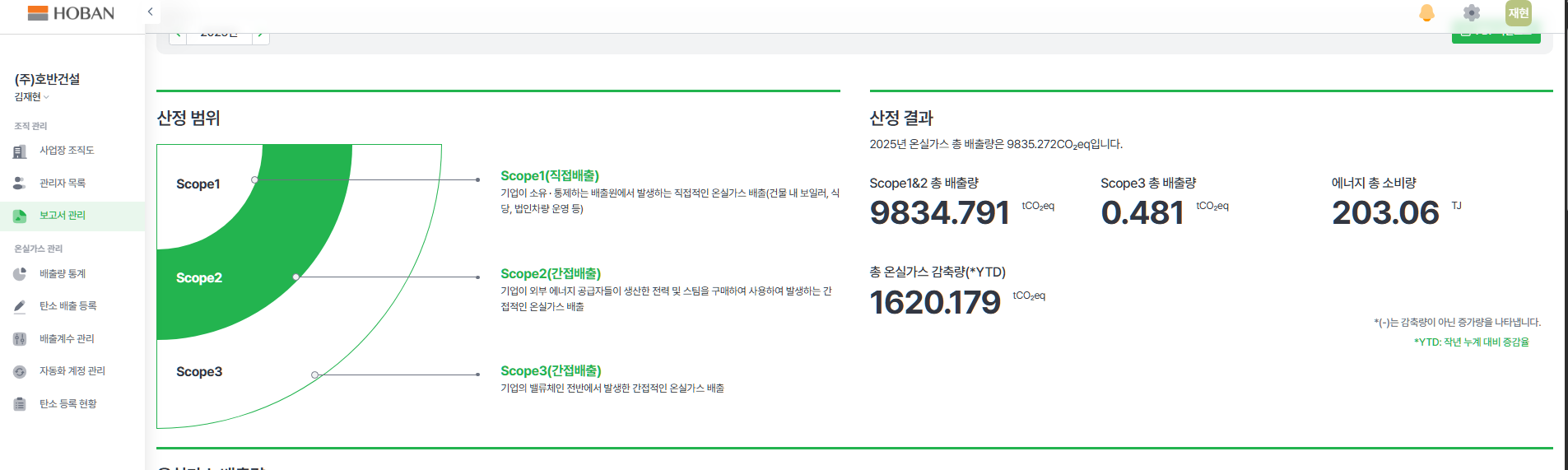
TANSOLUTION implemented at Hoban Construction. Emissions from headquarters, branch offices, and jobsites can be managed in one place.
Source · LIVIT
When LIVIT Met Hoban
LIVIT has worked with Hoban Construction since 2023, calculating greenhouse gas emissions from its business sites and handling reports submitted to the Ministry of Land, Infrastructure and Transport. It is a partnership that has grown both deeper and broader over time. After winning the Hoban Innovation Technology Competition in 2025, LIVIT began managing headquarters data as well. Working directly with real construction-site data and listening to the people responsible for it allowed the company to refine a carbon management solution tailored to the realities of the construction industry. It came from seeing up close how emissions data flows from headquarters to individual jobsites, where that flow breaks down, and what the people managing it struggle with most.
Reduction and savings figures provided by LIVIT
The path from carbon data management as a matter of regulatory compliance to cost savings and a new source of competitiveness — TANSOLUTION helps companies take that first step.

Jung-min Lee
CEO, LIVIT Co., Ltd.
After majoring in environmental engineering at UC Berkeley, Lee worked with manufacturing data as an engineer at Tesla's Gigafactory and at the LG Electronics Software Research Institute. In 2022, Lee founded LIVIT and has since been building a system that connects fragmented construction carbon data from calculation through reporting. Lee also serves as a policy advisory committee member for Korea's Ministry of SMEs and Startups.
tanso.life →What stood out to you most when you began working with construction sites?
What struck me most was how fragmented emissions data was from site to site. Headquarters, branch offices, and dozens of jobsites were each managing electricity, fuel, and equipment-use data in different ways. When reporting time came around, the person in charge had to manually process and consolidate spreadsheets and supporting documents one by one. And once a building is completed and responsibility passes from the contractor to the operator, collecting the data becomes even more difficult.
Seeing that made us realize that consulting alone could not provide a repeatable solution for carbon emissions management. We needed a system that could standardize field data and connect it all the way through calculation and reporting.
What was the biggest challenge when you first entered the construction sector?
The lack of standardized emissions data in the construction industry. Every jobsite had different formats and management methods, and many of the people responsible were unfamiliar with greenhouse gas accounting itself. We went through our own trial and error, but gradually structured the flow of jobsite data and translated complex regulatory standards into easy-to-understand language and visualizations, eventually turning them into a clear process for data entry, verification, and reporting.
The Carbon Border Adjustment Mechanism (CBAM) and mandatory ESG disclosures are beginning to converge. Where do you expect the biggest changes over the next one to two years?
I believe the first major changes will come in the material supply chain and the building-use phase. As CBAM and ESG disclosure requirements converge, demand for embodied-carbon data on major materials such as cement, steel, and insulation will inevitably grow. At the same time, as Zero Energy Building certification requirements become stricter, contractors will have to manage not only the moment a building is constructed but also its energy use after completion.
Ultimately, we are moving toward an era in which construction companies will have to prove with data not only 'how well they built,' but also 'how little carbon was used to build and operate it.'

LIVIT team members based at the Gyeongsan headquarters and Pangyo research center.
Source · LIVIT
What advice would you give to younger entrepreneurs considering a startup in construction or architecture?
The problems in construction and architecture cannot be seen from behind a desk. If you go into the field, see the recurring frustrations for yourself, and learn to define those problems in the language of the people who experience them, there is plenty of room to build meaningful solutions in this market.