For a long time, lighting was simply about turning things on and off. Flip the switch up, the light comes on; flip it down, it goes off. For a long time, that simplicity was the whole story of lighting.
Not anymore. Lighting on a ceiling now detects whether anyone's in the room, adjusts its brightness to match the sunlight outside, and logs how much energy it's used. It can report a fire, and a city's streetlights can be managed from a single place. Lighting, which started out as the business of producing light, has quietly expanded into control, data, and safety.
This shift isn't one company's marketing claim. International standards like DALI, which digitally controls lighting fixture by fixture, and KNX, which ties a building's systems together as one, have been established for a long time now. Control that only switches lights on when someone's present, and dims them to match outdoor daylight, has already become a baseline item for commercial buildings meeting energy standards, and out in the city, smart street lighting that manages streetlights from a single point has been rolled out as a project by multiple local governments. The shift of light from something you switch on and off into equipment that exchanges data is already underway at the level of standards and policy.
Given that, what someone bringing lighting into a project needs also changes. Not just one good product, but a partner who can carry this entire expansion. A company that can pick out the scattered pieces — from components and fixtures, to control systems, to smart cities and fire safety — and weave them into one. That's exactly the position SHC Corporations, which will open a booth at the upcoming KOREA BUILD, has staked out.
From light to system, one company handles it all
SHC Corporations doesn't call itself a lighting company. The definition the company puts forward is "a technology solutions company that designs and delivers value at the point where technology, engineering, and human behavior meet." What it handles doesn't stop at lighting alone either. Lighting; smart cities and buildings; energy and environment; fire and life safety — these four form the company's business axis.
At a glance, these look like distant, unrelated fields, but in reality, they connect along a single line. The starting point is lighting. It begins with the components and fixtures that produce light, expands into the controls that adjust that light to the situation, then into the systems that manage an entire building or city, and finally into the territory that protects human safety. It's a structure that uses lighting as the entry point into infrastructure, stacking one layer on top of another from there. That's also why the company names smart buildings, smart cities, smart hospitals, and smart campuses as its application sites.
There's a reason lighting gets to take on this role. Lighting is the equipment laid most densely throughout a building, closest to people. Layer sensing and control onto the network where electricity already runs to every fixture, and you can make a space read how it's being used and respond on its own. Just turning lights off when nobody's around and dimming them when natural light comes in already cuts lighting energy use, and tying in heating and cooling, blinds, and fire detection through the same signal turns the lighting network into a nervous system that manages the building. With energy regulations tightening and operating cost and carbon both under scrutiny now, this is exactly why this approach has become the standard, starting from high-end sites.
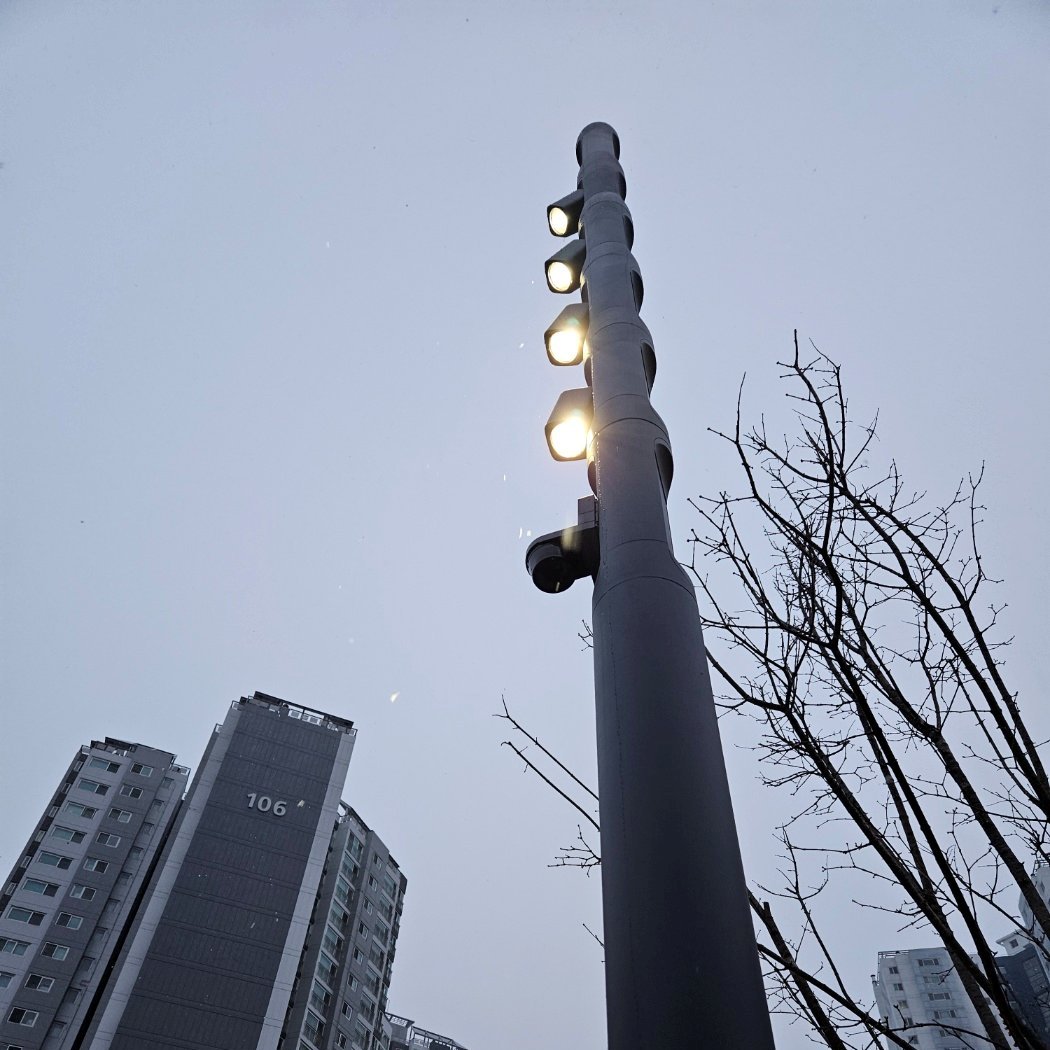
A single lighting pole carries lighting, cameras, and sensors together. A scene of light shifting from something you switch on and off into equipment that handles data.
At the center of this expansion is control technology that connects and manages lighting wirelessly. SHC isn't a company that builds this technology itself. Instead, it picks out brands already proven in each field and brings them in. Names ranked among the world's best in their categories — Germany's Vossloh-Schwabe, which has made lighting components for over a hundred years, and Silvair, which designed the Bluetooth mesh standard. What matters is that SHC doesn't stop at selling these brands individually. Combining and engineering multiple brands into a single solution, matched to a client's site and needs — that's the real product this company sells. SHC handles the shift of lighting from "now" to "next" not by owning the technology itself, but by picking the best and weaving it together.
Bringing in the world's specialists
SHC's portfolio holds twelve brands. But the company's strength isn't the number of brands — it's that each one is already top-tier in its own field.
Add SHC's own in-house brand, and that's twelve in total. A single brand can span more than one category; the groupings above reflect each brand's primary area.
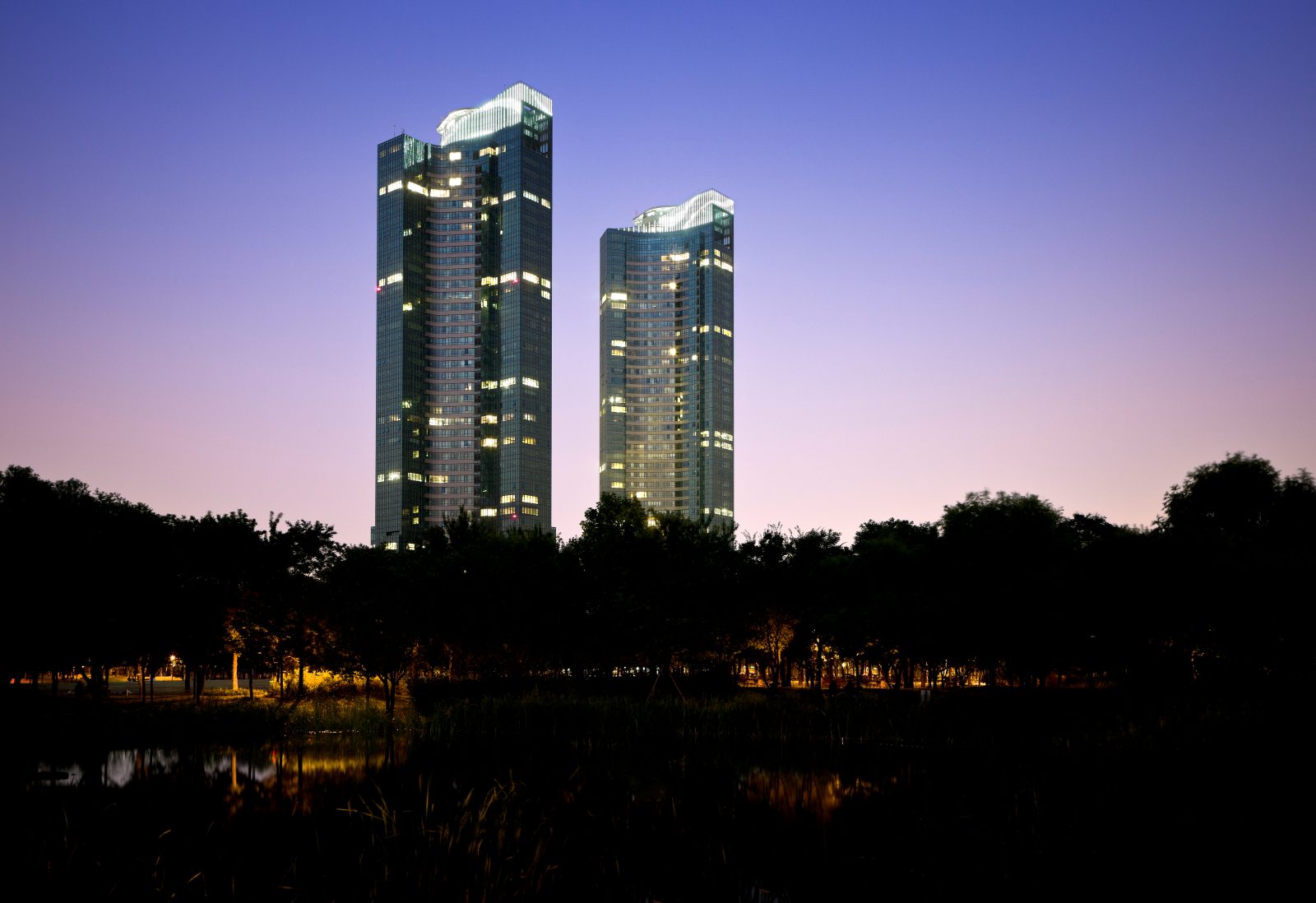
Galleria Foret at Seoul Forest. Handled the lighting for this high-end residential complex.
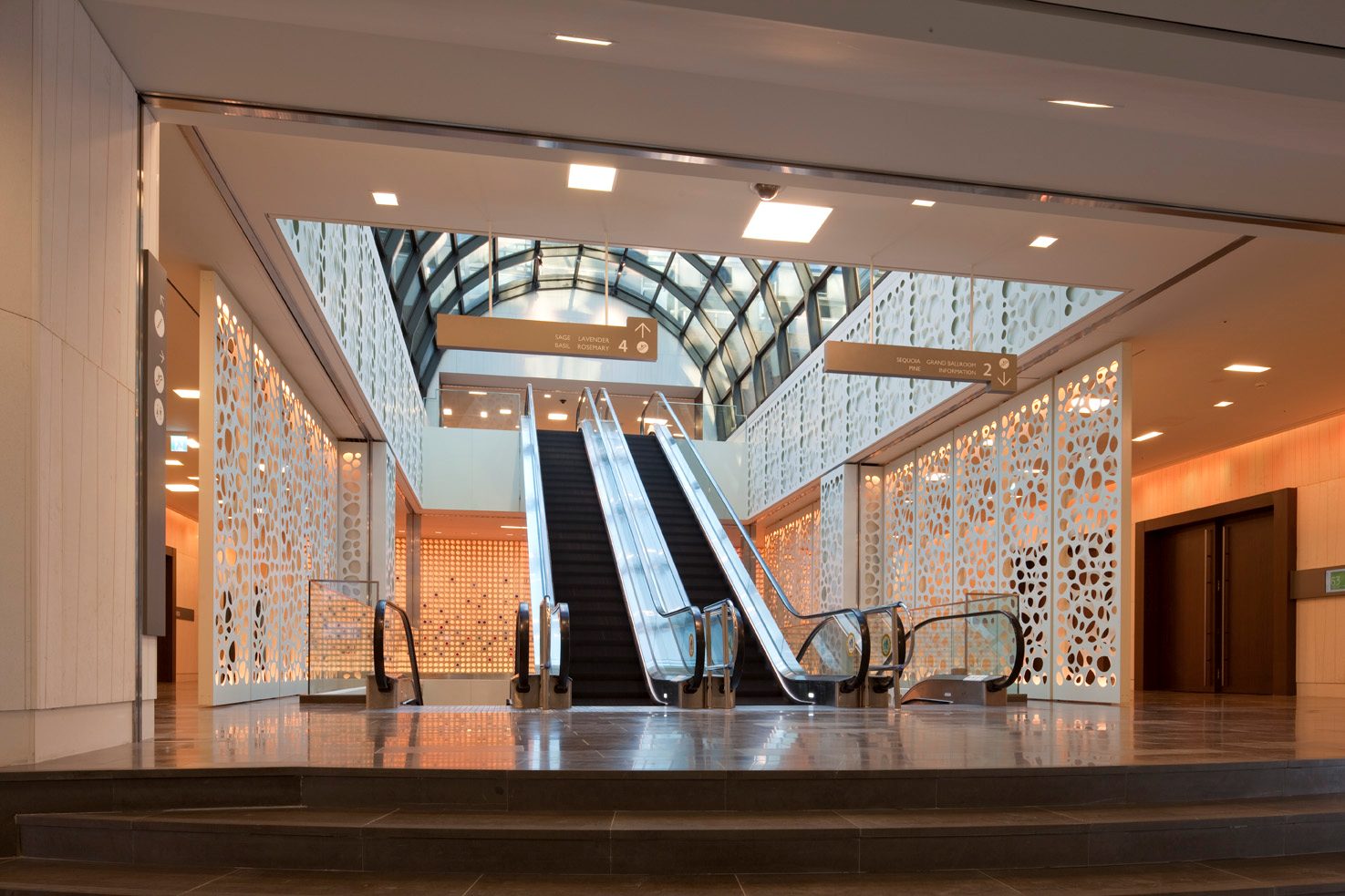
63 Convention Center. Handled the lighting for this large-scale event space.
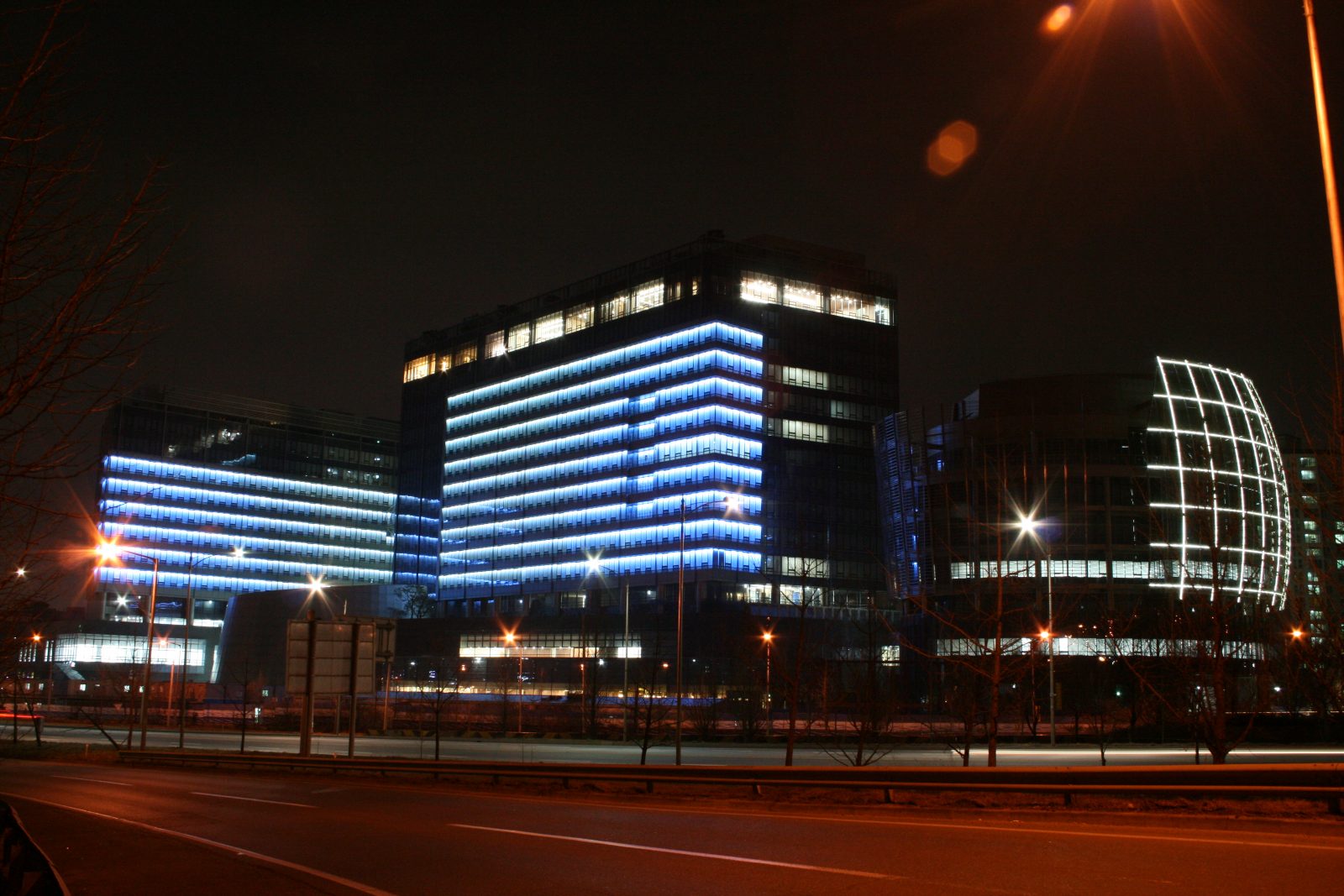
Vossloh-Schwabe, which handles components, is a prime example. Mentioned earlier, this German company has made lighting components for over a century and stands as something close to the old benchmark of the field. The Samsung Engineering headquarters mentioned at the start of this piece, where blue light flows across the glass facade at night, uses exactly this company's lighting solution. Norway's SG, on the fixture side, is a leading Nordic manufacturer that holds a large share of its home lighting-fixture market. Move to landscape and street lighting, and there's France's Ragni — a public-lighting house in its fourth generation since 1927, supplying lighting to more than 60 countries and named among the "Living Heritage Companies" designated by the French government. Silvair, in the software control category, is, as noted earlier, the very company that designed the Bluetooth mesh international standard. Looking at the names alone, they seem to have nothing to do with each other, but the common thread is clear: each one ranks among the world's best in its own field.
Recognizing and gathering brands like this takes real judgment. And judgment alone isn't enough. SHC brings a good number of these brands into Korea on an exclusive basis, and for a few, it's the general partner covering the entire Asian market. Vossloh-Schwabe and SG can only be reached in Korea through SHC; Ragni, likewise, across the Asian market. For a Korean architect or contractor who wants to use these brands, SHC is, in effect, the only channel.
In the end, SHC's portfolio isn't a catalog of products gathered together — it's closer to a roster of specialists from each field, called together in one place. And because that roster exists, whichever direction lighting expands into, SHC can pull out the right specialist for it and combine them accordingly.
Weaving scattered pieces into one
Having several good brands on hand, and making them mesh smoothly on a single job site, are two different things. The real difficulty in a lighting project usually comes from the latter.
Say you're building a building. If components come from one company, fixtures from another, and the control system from yet another, the job of making them all fit together falls squarely on the client and the contractor. Specs don't line up, schedules clash, and when a defect appears, even figuring out which side is responsible becomes its own task — the burden of dealing with multiple vendors is bigger than it looks. SHC's integrated supply lifts that burden. Because it designs and supplies everything through a single channel — components, fixtures, control, and on into smart city and fire safety — the client only has to talk to one partner instead of coordinating several companies.
The advantage becomes clearer after installation. The more lighting becomes a system tied to control and data, the more it matters whether there's a single point of contact who can trace the cause when something goes wrong. If components and controls belong to different companies, responsibility scatters — but if it was designed as one system from the start, the after-sales response stays on a single line too. In a building meant to last decades, that difference isn't small.
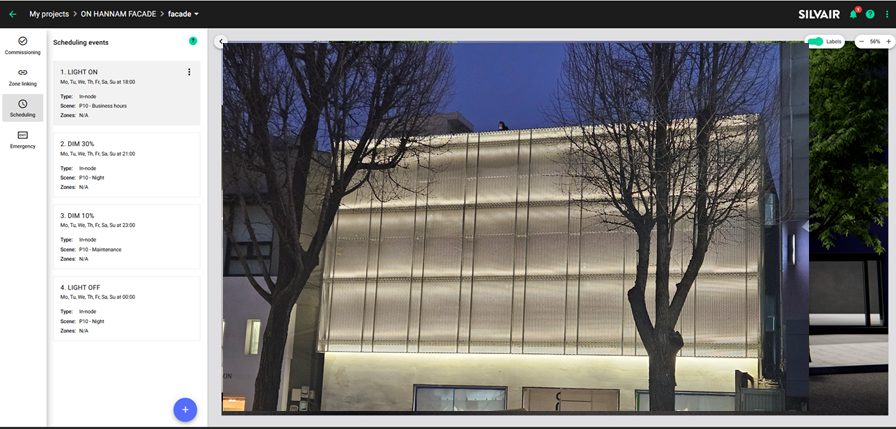
An ON Running store. An integrated management system ties together the lighting across the entire store.
Above all, this integration isn't a matter of selling a fixed package. The fact that the same brands can produce a different answer at every site comes from rebuilding the combination fresh each time, matched to how the space is used, its budget, and how it's managed. This is exactly where that "roster of specialists" mentioned earlier earns its meaning. The broader the roster, the easier it is to pull out the combination that fits a given site exactly — and designing that combination into one and handing it over is what SHC actually does.
Work already done
A track record is often used as a language of boasting. But what's worth noting in SHC's project list isn't how impressive the names are — it's whether that list actually proves the story told above. In particular, the company's claim that lighting is moving into control and systems only carries weight when it's backed not by words, but by sites it has already built.
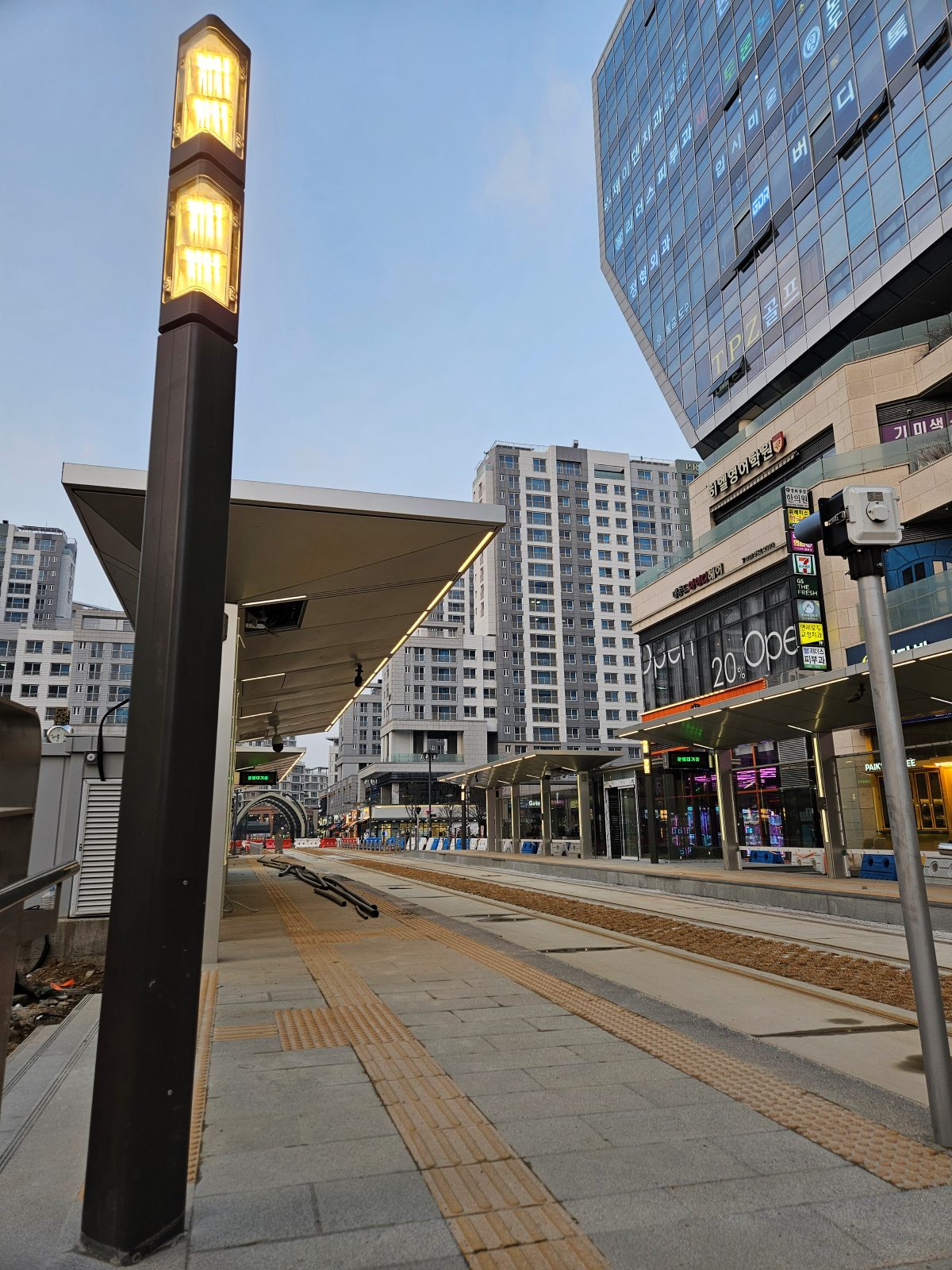
Wirye tram station. Fitted with France's Ragni pole-style lighting.
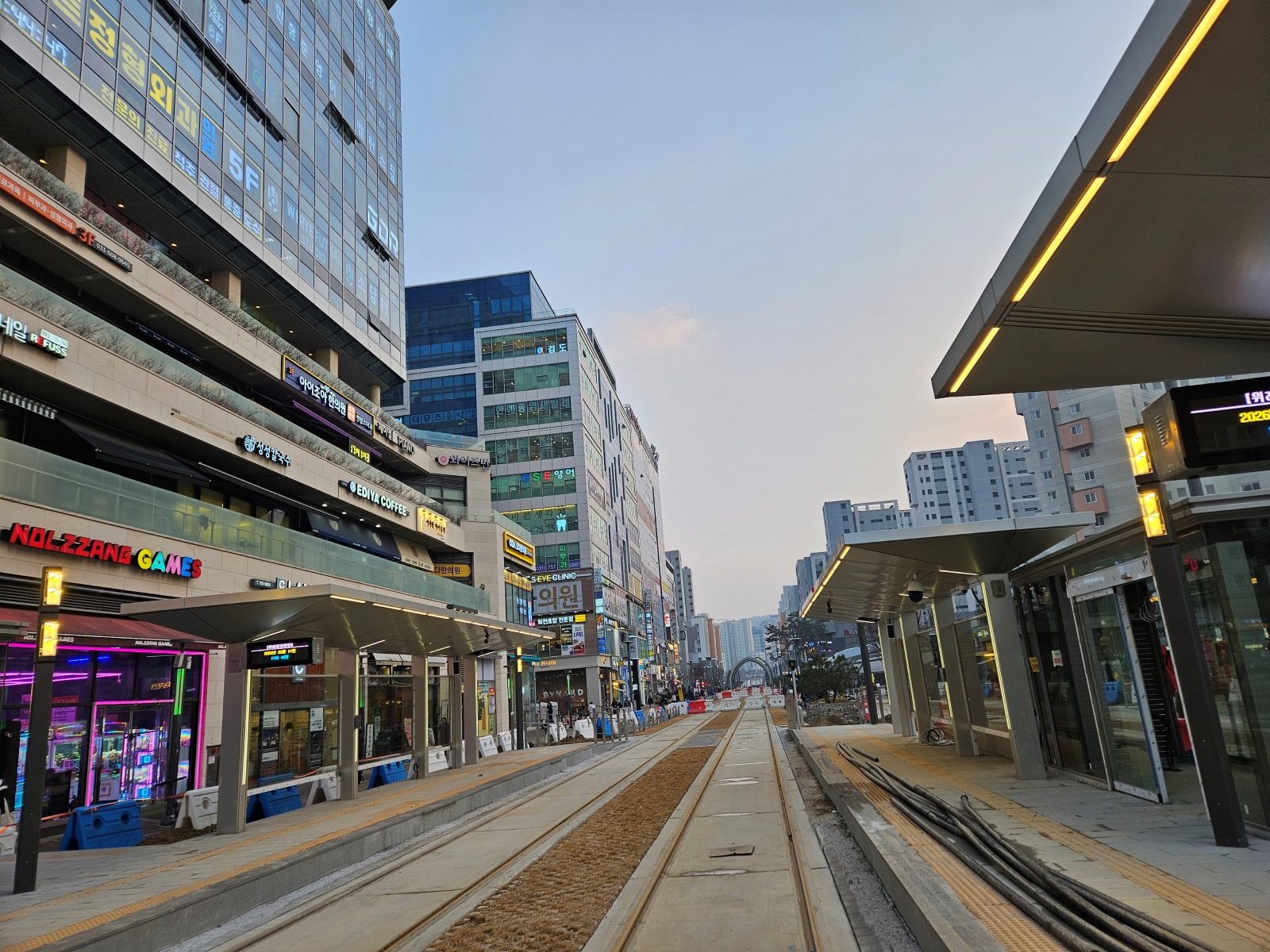
Ragni lighting lined up along the station. A smart-city case adding lighting to urban infrastructure.
At Dongtan Skylight Park, the project didn't stop at installing lighting — it also included a lighting management system (LMS) that manages multiple fixtures from one place. At Google's L23 office in Seoul, the company installed Norway's SG fixtures alongside a DALI control system. DALI is an international standard control method that adjusts and manages lighting fixture by fixture, letting a space be handled with real precision, well beyond simply switching lights on and off. At the newly built Wirye tram station, France's Ragni pole-style lighting was installed — a case in the smart-city category, adding lighting to urban infrastructure. All three sites, without exception, show that what SHC calls "next" isn't a plan — it's work already carried out.
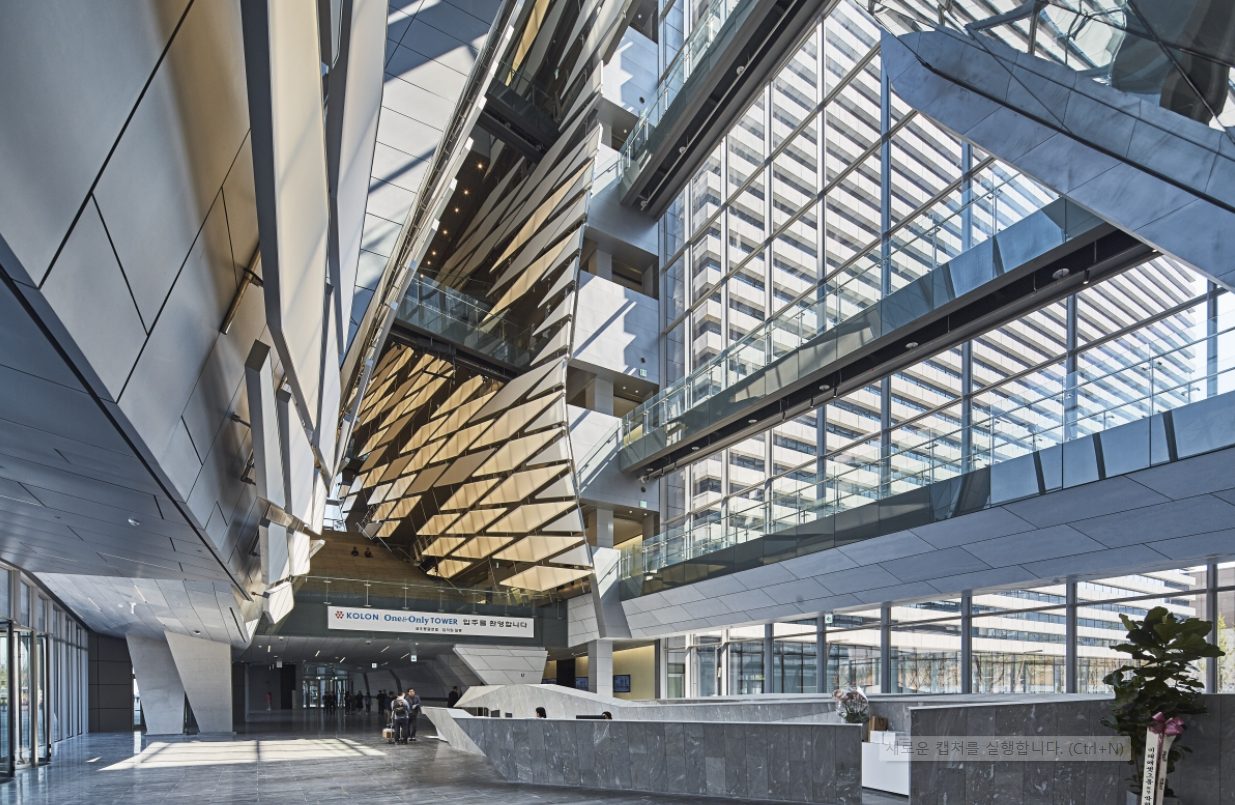
Kolon's Magok headquarters. Handled the lighting for this office space.
The same holds true for scale and range. The company has handled overseas landmarks like Lotte Center Hanoi in Vietnam, and residential spaces like Galleria Foret at Seoul Forest. There are offices with entirely different characters, like Naver 1784 and the PUBG headquarters; hotels and resorts, like Busan's Paradise Hotel; and retail spaces, like the entire lineup of Swiss running brand ON's stores in Korea. These sites, each serving a different purpose, aren't the result of installing the same fixed product over and over — this list is only possible because a different combination of brands was assembled for each individual space.
In the end, this list says one thing. SHC isn't a company promising to do well in the future — it's a company that has already done this, from lighting to control to systems, many times over. That's exactly why the phrase "future-readiness" isn't an empty one here.
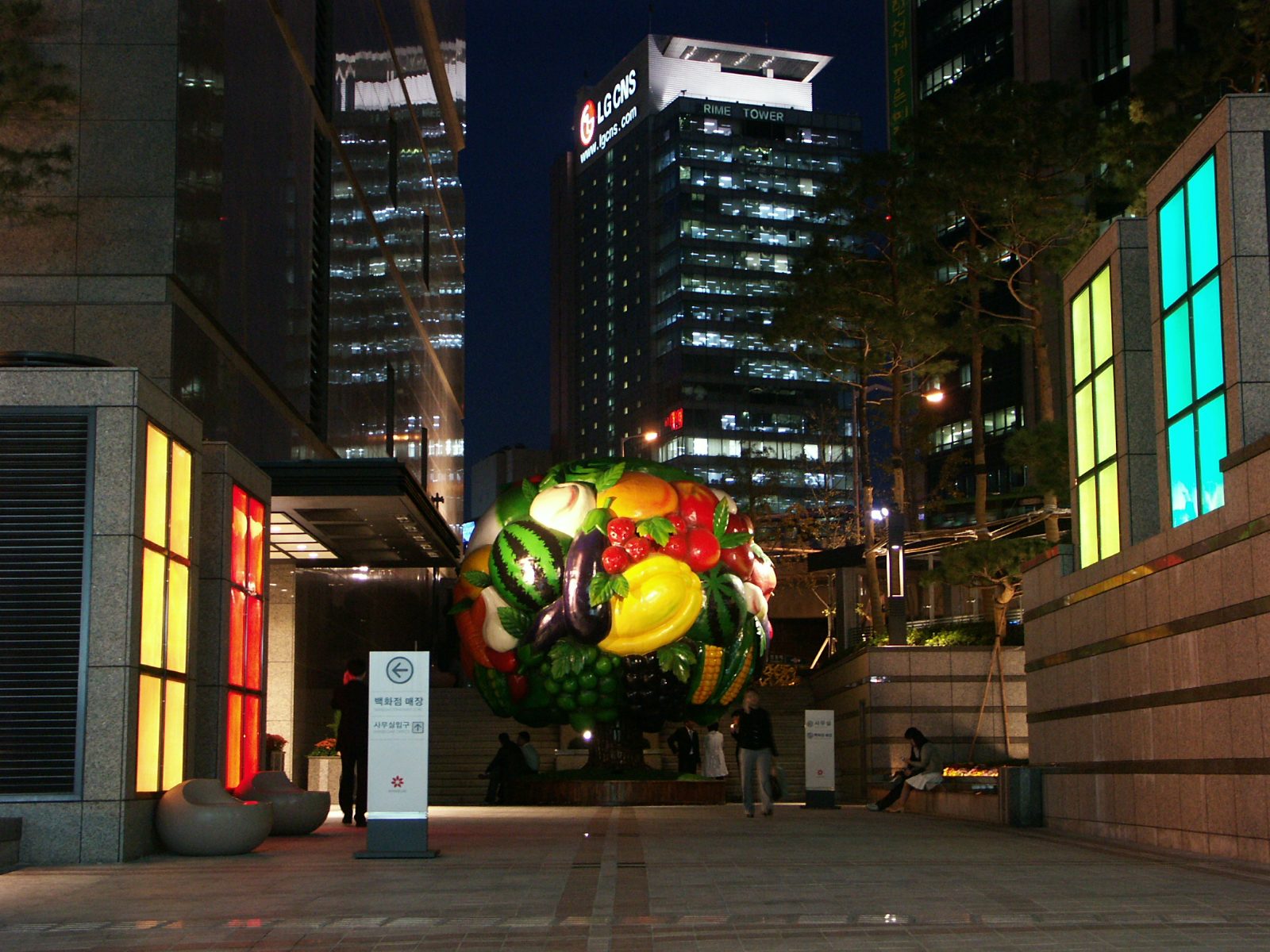
Shinsegae Department Store. Handled the lighting for this retail space.
Not selling a product, but selling a transition
Choosing good lighting, and preparing for what lighting will become next, are two different jobs. Picking specialist brands from around the world and weaving them into a single solution fitted to the site — that's ultimately what SHC Corporations sells. Now that lighting is shifting from product to system, this company's place isn't on the side selling the object — it's on the side designing that transition itself.
Light is no longer just something you switch on and off — it's becoming equipment that senses, responds, and records. Designing that entire transition and handing it over is exactly where SHC Corporations stands, and it's something you can see for yourself, all in one place, at this year's KOREA BUILD.