Where is the standard for high-end shifting to?
The word "high-end" has never been this common. It gets attached to luxury residential brands, upscale office space, hotels, and resorts alike. Yet what the word actually points to has changed quite a bit from before. A decade or so ago, high-end was mostly explained by what you could see: a rare location, generous floor area, expensive finishing materials, furniture and lighting from famous international brands. The caliber of a space was usually decided by visible elements.
Today the focus has shifted elsewhere. Rather than the grade or flashiness of materials, what matters is how people actually live in that space day to day — how comfortable it is, how efficiently it runs, whether its value holds up over time. Digital technology has pushed this shift along at just the right moment. Architecture is becoming less a structure that stops the moment it's finished, and more something that keeps changing in response to the lives of the people living in it.
There's a company that has been putting this shift into practice longer than almost anyone: JUNG, founded in Germany in 1912. Architects and designers around the world don't choose JUNG's switches and control systems for performance alone. What they're really choosing isn't a switch so much as a whole attitude toward how to look at a space.
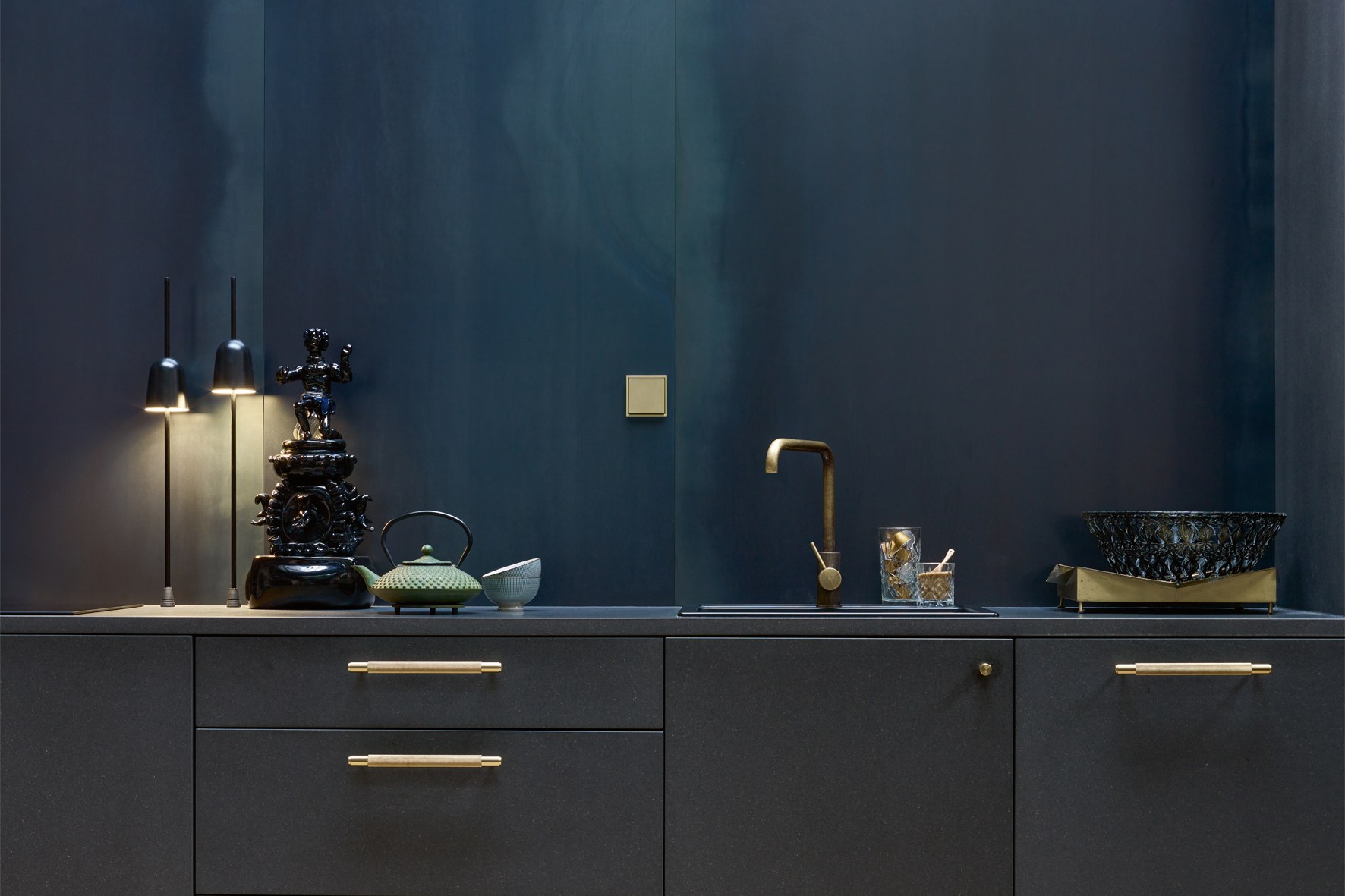
A dark-toned kitchen. A brass-finish switch sits in place like part of the wall itself. In a well-composed space, a switch rarely stands out.
Courtesy · JUNG Korea
JUNG's switch has worn the same face for 60 years
That attitude comes through clearly in JUNG's flagship product, the LS 990. It's still used exactly as-is on construction sites around the world today. A simple square, proportions stripped of anything extra. What looked unremarkable at first glance has, over time, only earned more respect.
The LS 990, in fact, isn't a flashy product. It's the opposite. The design is as restrained as it can be, engineered to fade quietly into the wall. And that's exactly where architects find it appealing. The idea that the space itself, and the people living in it — not the switch — should be the main character runs through every part of the product. How does that restraint hold up for more than 50 years? Because it never goes out of style. A building, once constructed, gets used for decades — sometimes across generations. It's a problem if the objects inside it start looking dated within a few years. A design built to last is, in that sense, a value all its own.
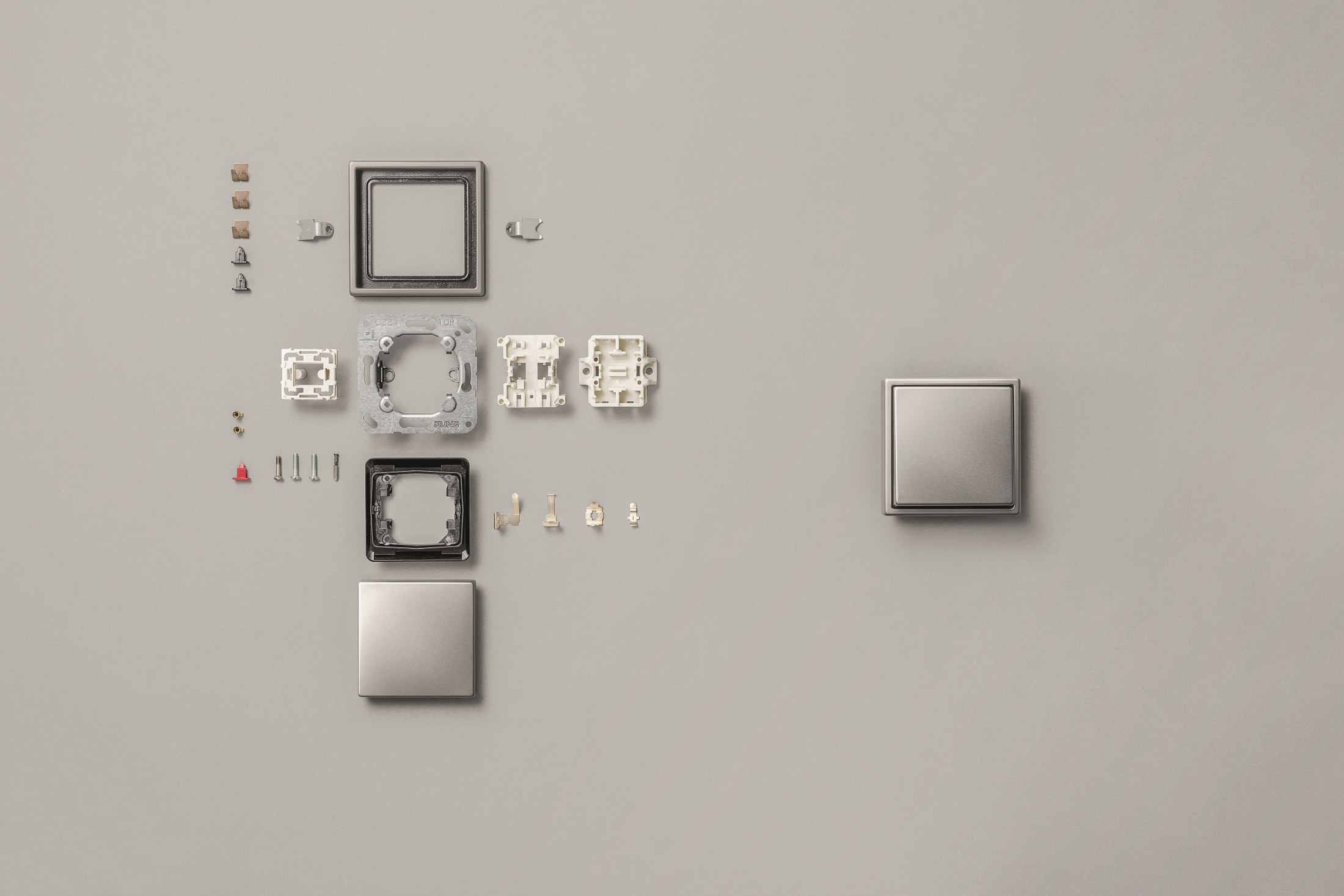
An exploded view of the LS 990. Behind the simple square face, the frame, contacts, and mechanism are all precisely fitted together.
Courtesy · JUNG Korea
What keeps this consistency going is an insistence on making things in-house. JUNG was founded in 1912 by Albrecht Jung in Schalksmühle, Germany, and for 114 years has developed its own electrical fittings and control technology directly. The company was making even the tools used in production itself from early on — holding the entire manufacturing process in its own hands to protect quality.
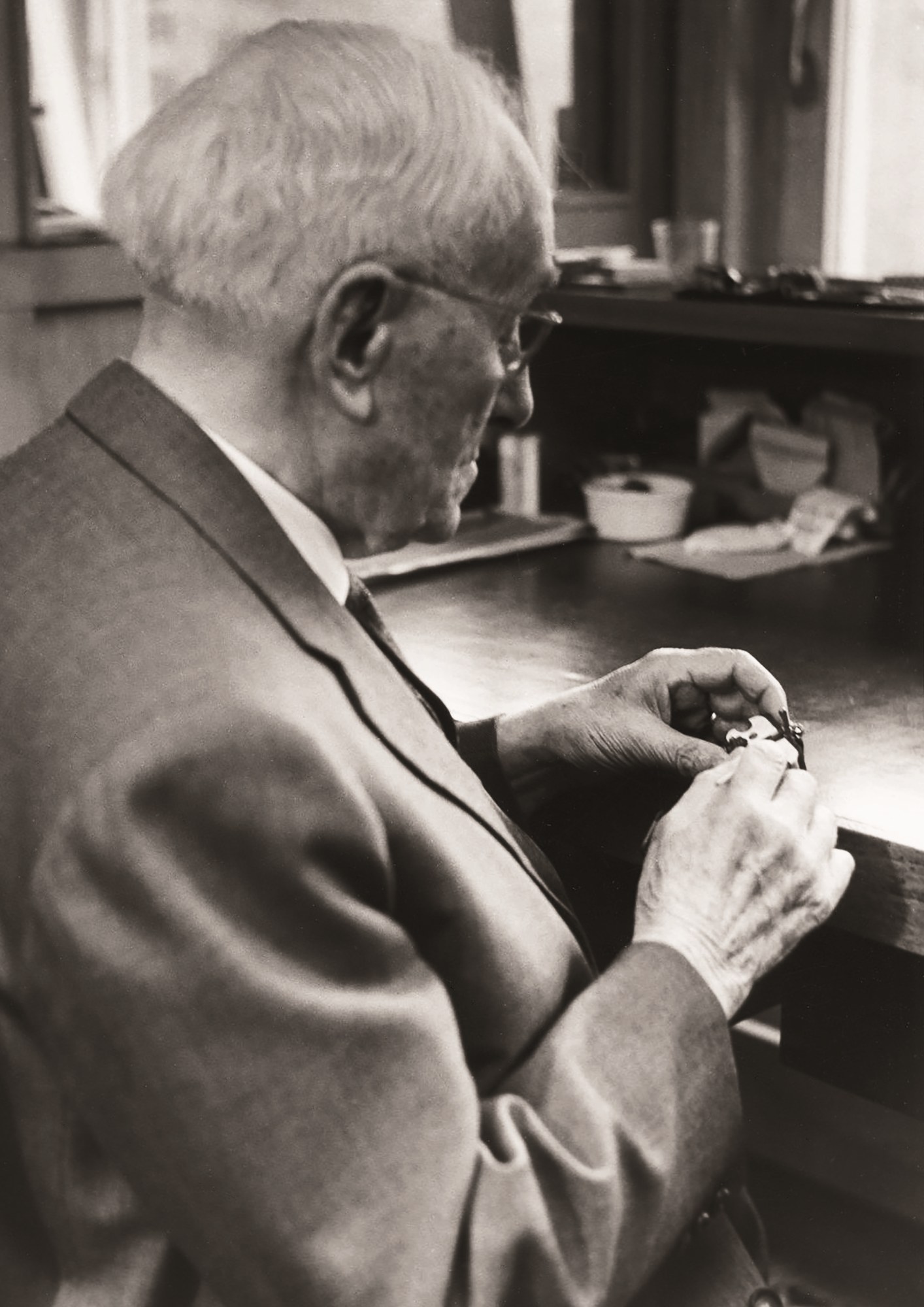
Founder Albrecht Jung. He built the company handling parts himself at the workbench.
Courtesy · JUNG Korea
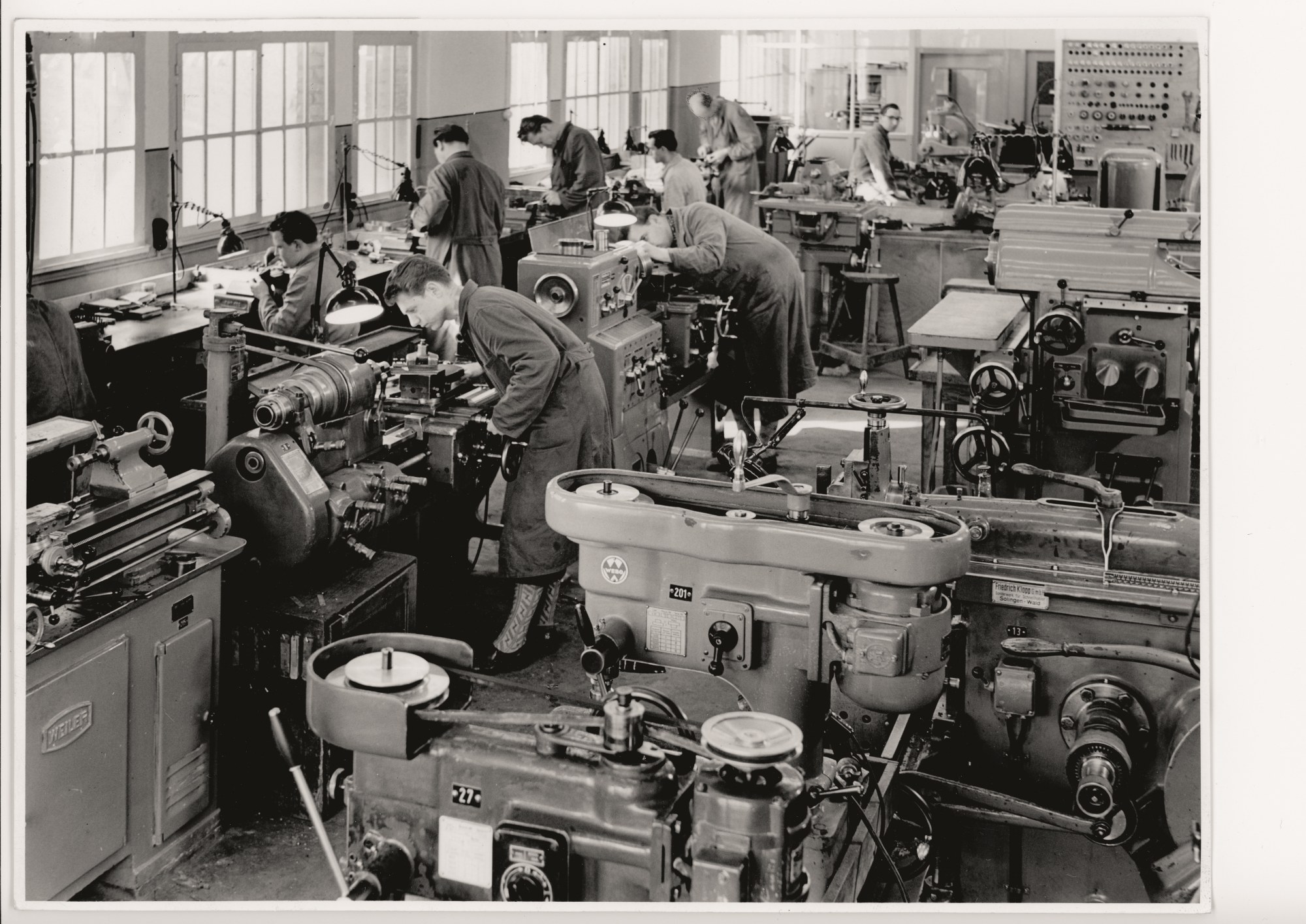
The Schalksmühle factory in 1952, back when even the tools used in production were made in-house.
Courtesy · JUNG Korea
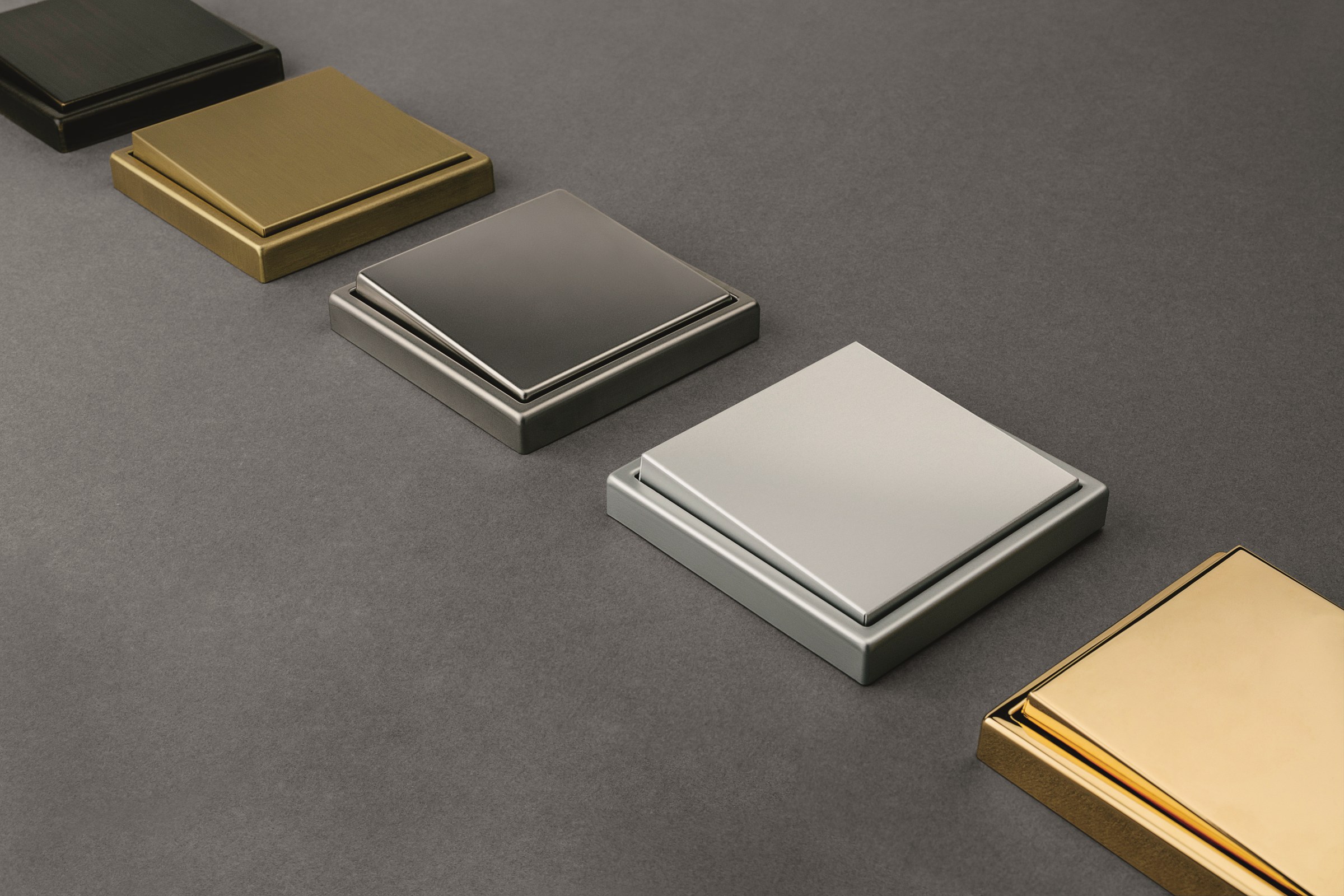
The product lines that work in materials as different as aluminum, stainless steel, brass, and glass all grow out of that same foundation. Each one pairs with a different architectural language, becoming a detail that raises the finish of a space.

Gloved hands finishing a brass cover. JUNG manages the process of selecting and finishing materials in-house.
Courtesy · JUNG Korea
Another thread that's expanded the range of design is color. JUNG has offered a collection built on the color system laid out by the architectural master Le Corbusier (Les Couleurs® Le Corbusier®). Le Corbusier saw color not as decoration but as an element of architecture itself, and JUNG has carried that idea into today's spaces, turning even a switch or control device into part of what completes a space's color scheme.
In the end, every product faces the same question: "Will this still look valuable in 10 years, in 20?" JUNG has spent 114 years chasing that answer, and the answer is still standing in high-end homes, hotels, and cultural and commercial spaces around the world. A single switch that blends naturally into the wall, the texture of a single material under your fingertip — either one can shape the impression of an entire space. The idea that high-end gets decided in the small details rather than the big ones becomes fact in places like this.
But design alone doesn't finish the job
Today's high-end, though, isn't complete with polished design alone. People using a space expect a better experience — lighting that adjusts its own brightness, indoor conditions that respond to the situation, energy managed so nothing goes to waste. That's already the baseline expectation at no small number of high-end projects.
There's a paradox in this. The better the technology, the more it earns its value by going unnoticed by the person using it. Not demanding complicated operation, showing itself only at the moment it's actually needed, never getting in the way of a space's beauty — that's what makes technology genuinely smart. It's a strange echo of the restraint we saw in the switch earlier. That's why JUNG doesn't treat design and technology as separate things. If design is the vessel that holds the technology, technology is what fills in the experience that design promised.
The technical foundation here is KNX — an international standard that ties together multiple building functions under one system, handling lighting, blinds, heating and cooling, ventilation, security, and energy management all in one place. KNX's real strength is that it's an open standard, not tied to any one manufacturer. A building owner can run the system with a long-term view and freely combine products from multiple manufacturers. That suits the nature of a building meant to last decades — the same reason for insisting on a design built to last is exactly the reason for choosing a technology standard built to last.
JUNG says it builds "intelligent spaces" on top of this — going beyond simple automation. Lighting matched to living patterns, heating and cooling optimized by season and time of day, indoor environment management, and energy savings all work together within one system. More recently, the company has released "JUNG HOME" for easier residential control, and partnered with Samsung Electronics' SmartThings so that devices from different manufacturers can be handled within a single environment — managing lighting, blinds, and appliances together from a single smartphone.
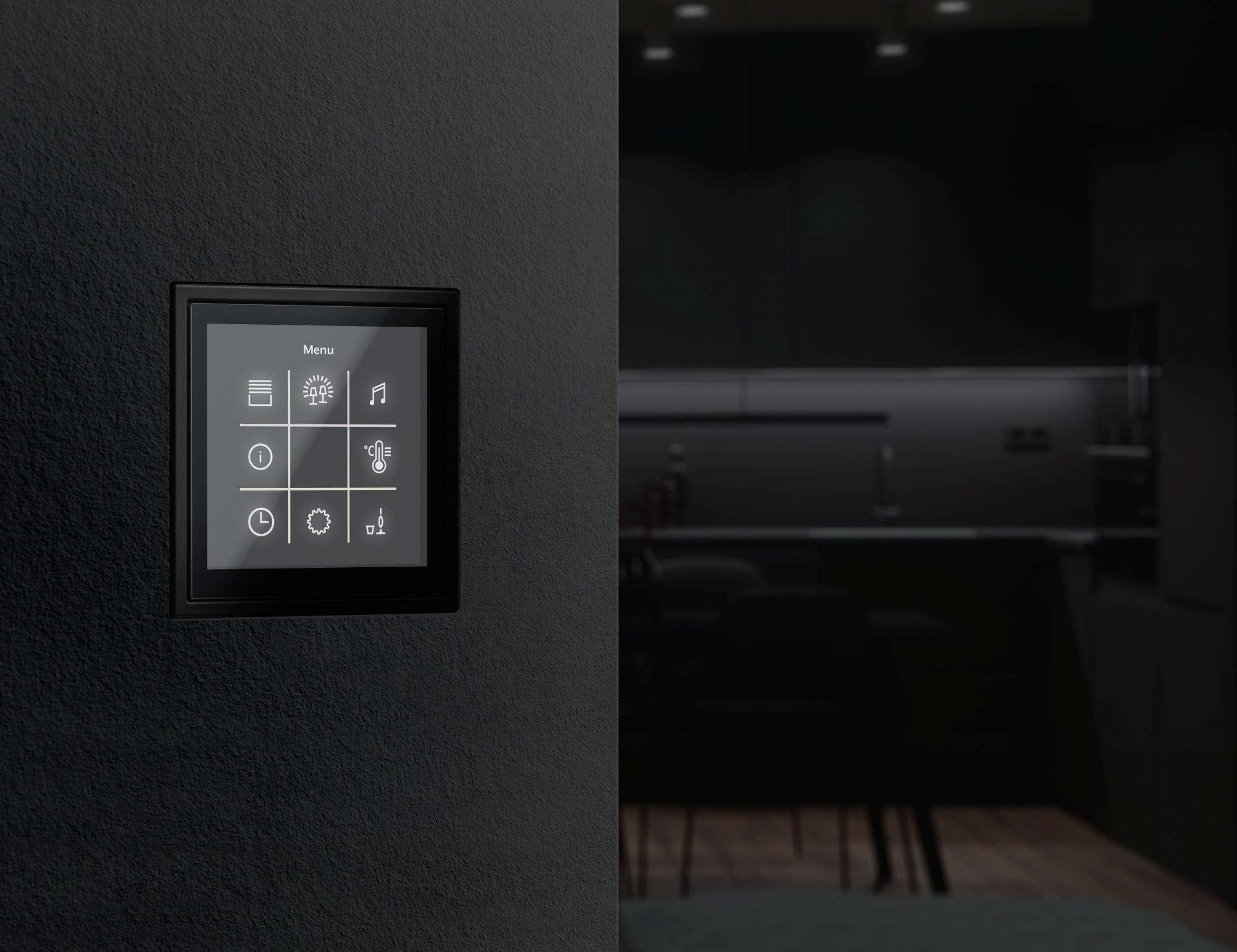
A single touch panel set into the wall calls up lighting, blinds, heating and cooling, and music.
Courtesy · JUNG Korea
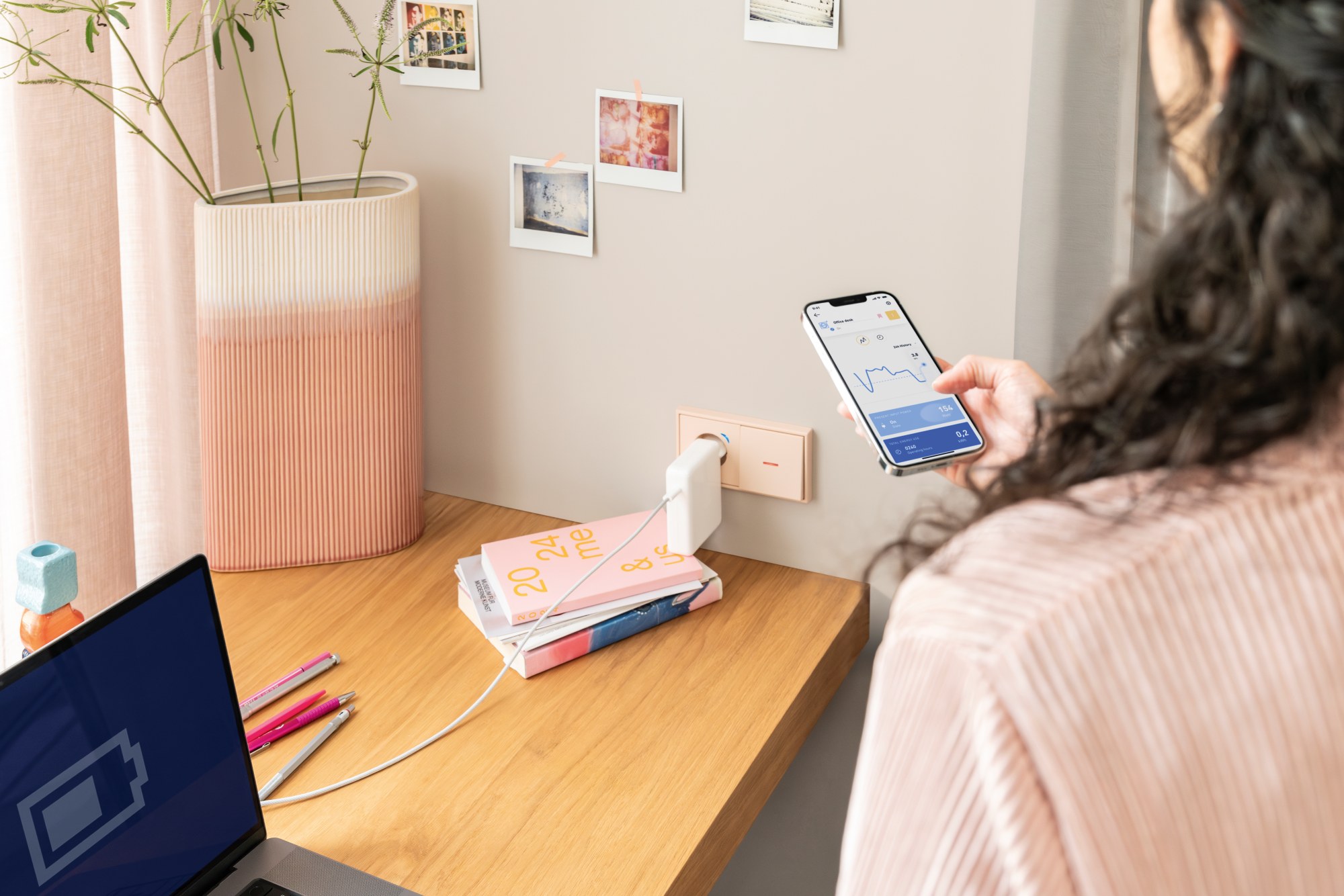
JUNG HOME brings the same control and energy-usage information into a smartphone.
Courtesy · JUNG Korea
What JUNG really emphasizes, though, isn't the technology itself. It's how naturally that technology supports a person's life. Technology shouldn't be the center of a space — it should be the background that quietly supports the person living in it.
The intelligent space is already happening
That this isn't just an abstract idea shows up on real sites. Doogaheon, set in Jeju's Jeoji Arts Village, is both a gallery and a collector's home. SmartThings has been applied throughout the space, so sensors and appliances everywhere respond automatically to the situation and living patterns. Lighting and temperature aren't managed separately either — they're handled together. And through it all, JUNG's switches and wiring devices handle the control without disturbing the finish of the interior. In a space where the art is meant to be the main character, the technology doesn't push its way forward.
Acro Seoul Forest, a luxury residential complex beside Seoul Forest, works on a different scale. KNX-based integrated control runs across the entire complex, handling lighting, blinds, and heating and cooling from a single screen — operating not just within one home, but across the whole complex.
Together, the two spaces make one thing clear: this kind of control isn't some distant future scenario anymore — it's already one pillar of what makes residential value today. And whether the scale is large or small, the technology never steps forward ahead of the space itself.
Staying in the background doesn't mean having no presence. In certain settings, JUNG's design clearly changes the whole expression of a space — sitting quietly and neatly like the white wiring devices in a hotel room, or becoming a small painting on the wall when finished in a Le Corbusier color.
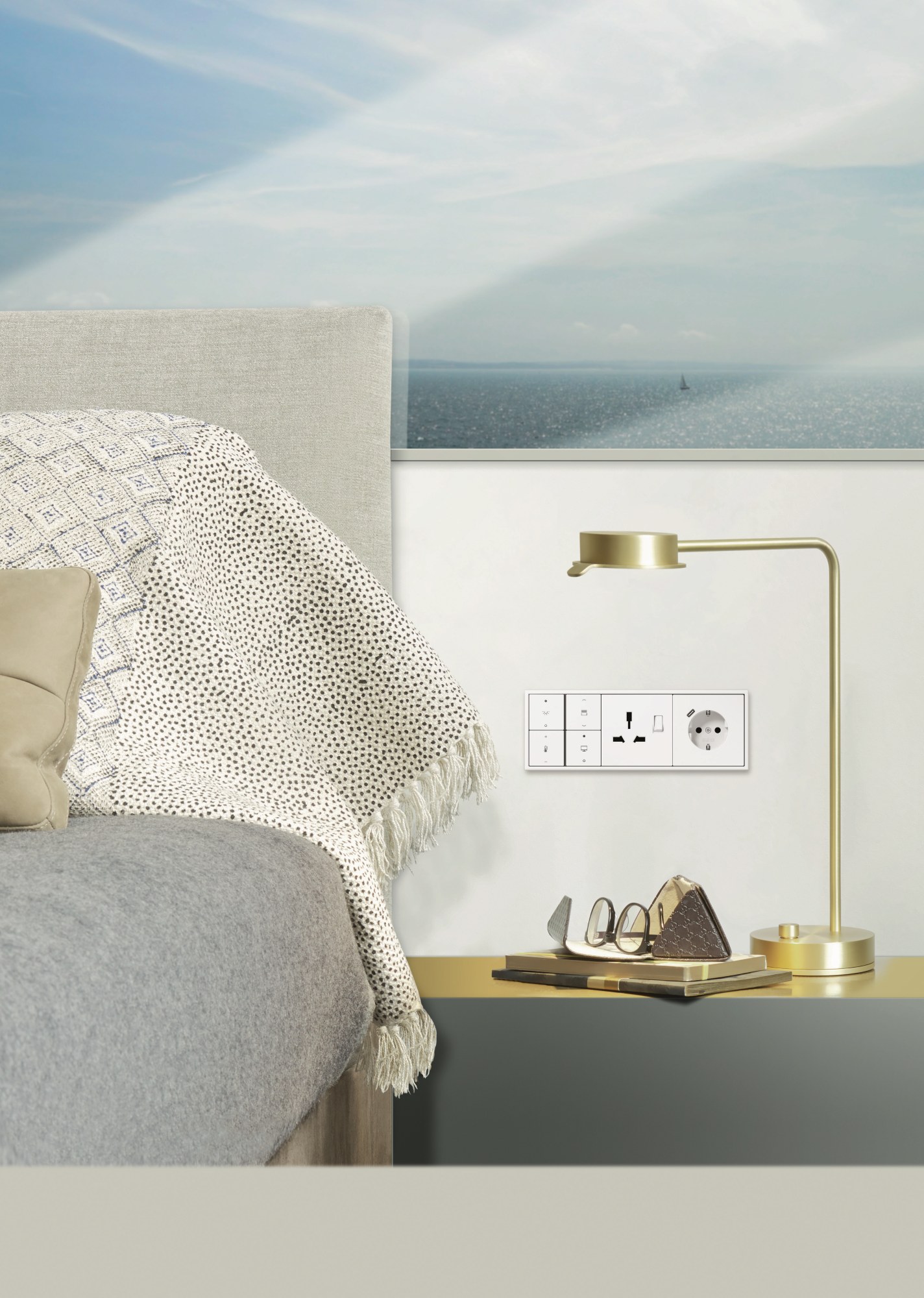
The head of a hotel bed. Switch, outlet, and charging port sit together in one tidy module.
Courtesy · JUNG Korea
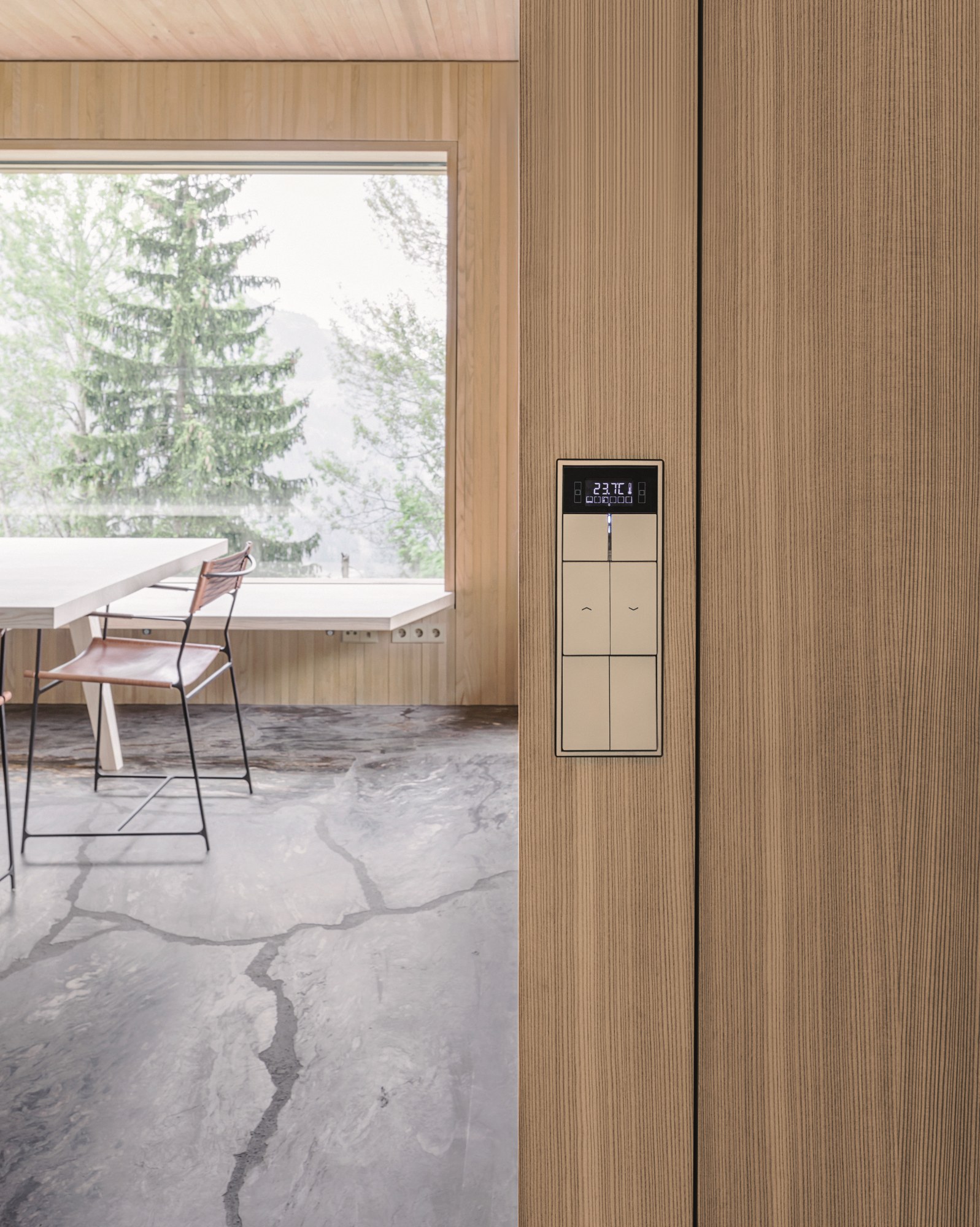
A switch and thermostat that blend with the finish. The product settles right into the grain of the wood wall.
Courtesy · JUNG Korea
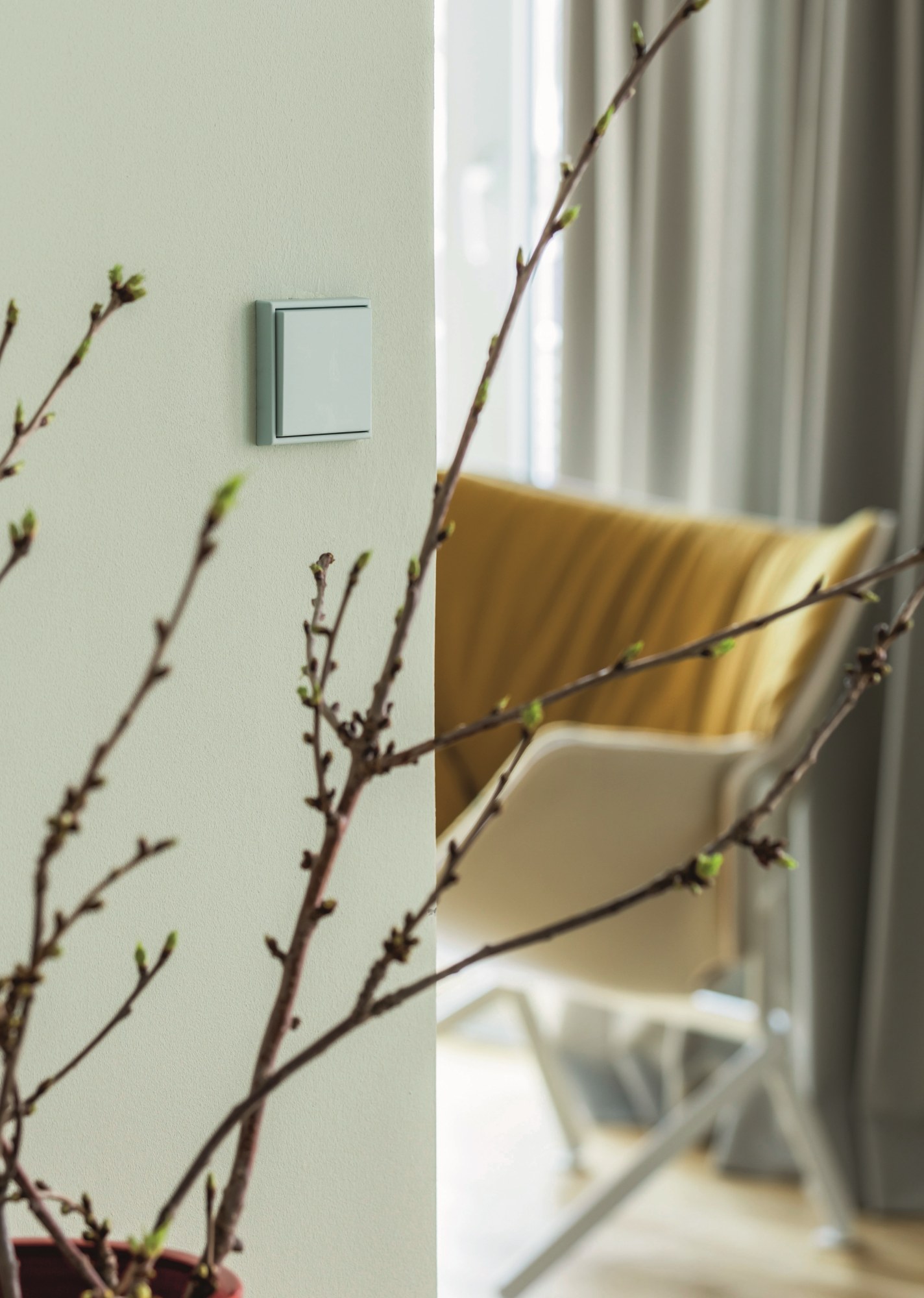
A Le Corbusier color chosen to match the wall's own tone. The switch becomes a piece of the wall itself.
Courtesy · JUNG Korea
A good supporting role completes a space
Back to where we started. A switch that hasn't changed its face in 60 years, and control you never notice is even working. The two seem far apart, but they come from the same root. Both take a step back, put the space and the people in it first, and cast themselves as the supporting role.
That's the idea JUNG has held onto since 1912. Architecture and technology have changed constantly, but the principle of building a space centered on people never moved. Technology exists for people; a space is the background that makes life richer. That's also why, on today's high-end sites, switches and control systems are treated as more than mere fixtures — as an element of architecture and interior design in their own right. What used to be nothing more than a functional device stuck to a wall is now a detail that completes a space's design language, while also serving as the control point for lighting, blinds, and heating and cooling. Technology fading into architecture and design instead of stepping out in front — that's the picture of a smart space JUNG is drawing.
Timeless design, and control that keeps pace with the times. Two values that seem to stand on opposite sides, JUNG brings together in one place. The method, it turns out, is remarkably simple: knowing how to take a step back. A good supporting role clears the stage — and only then do the space and the people in it truly become the main characters.