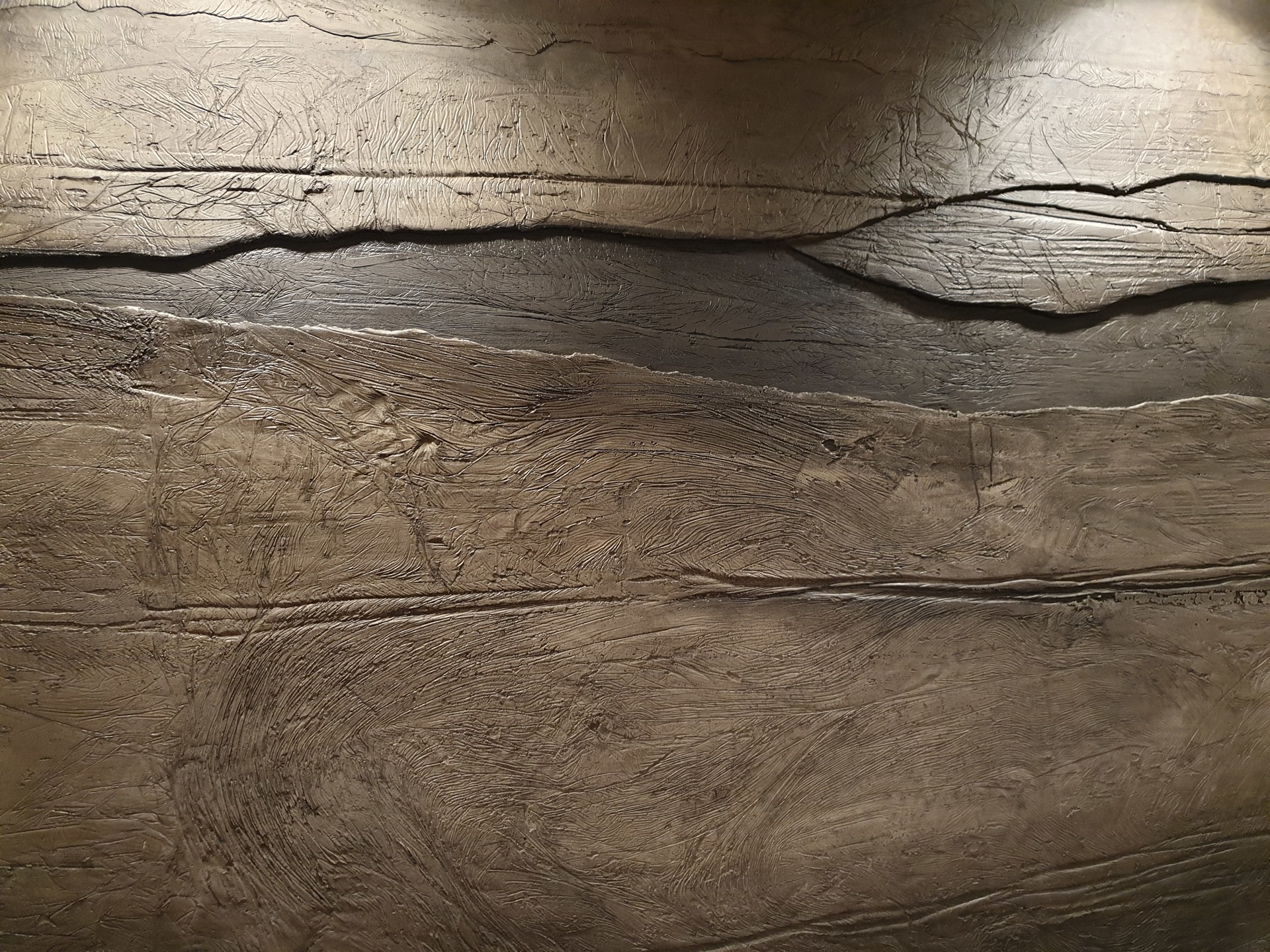
Designing the surface
Plastering is usually invisible work — thought of as prep, the step that flattens a wall before tile goes up or wallpaper goes on. TORO puts that plastering last. The surface, once spread, set, and smoothed, becomes the finish itself, with nothing left to cover it. The same mix of material can come out smooth or stand up rough, depending purely on how the trowel moves across it. The surface changes with every pass of the hand.
European Plaster
First, European plaster — a technique built on thinning lime and applying it in several thin layers, which hardens like stone once dry. A smoothly polished surface reads differently depending on the light, taking on a different sense of depth each time. It's not showy. If anything, it sits back like a backdrop, setting the temperature of the whole space.
TORO offers this European plaster under the name "Clay Deco." Built mainly from lime, it's physically solid and holds up on interior walls as well as bathrooms and exterior walls alike. More recently, the company added "TOV" — a version of European plaster, traditionally spread with a trowel, that can be applied like paint with a brush instead. A finish that's notoriously tricky without practiced hands has been made about as easy to handle as paint.
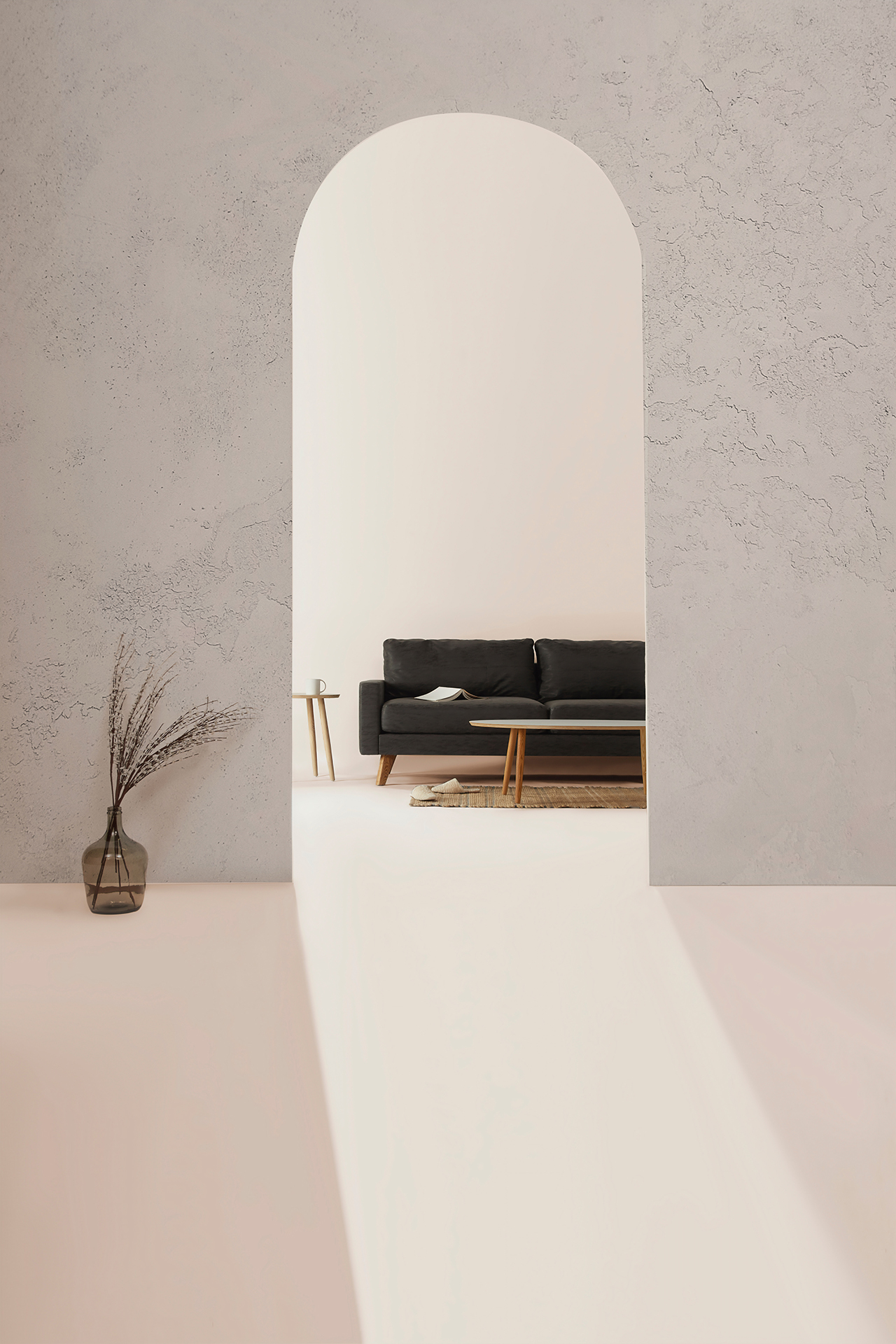
A wall and archway finished in European plaster. The smooth surface takes on depth as the light hits it.
Courtesy · TORO
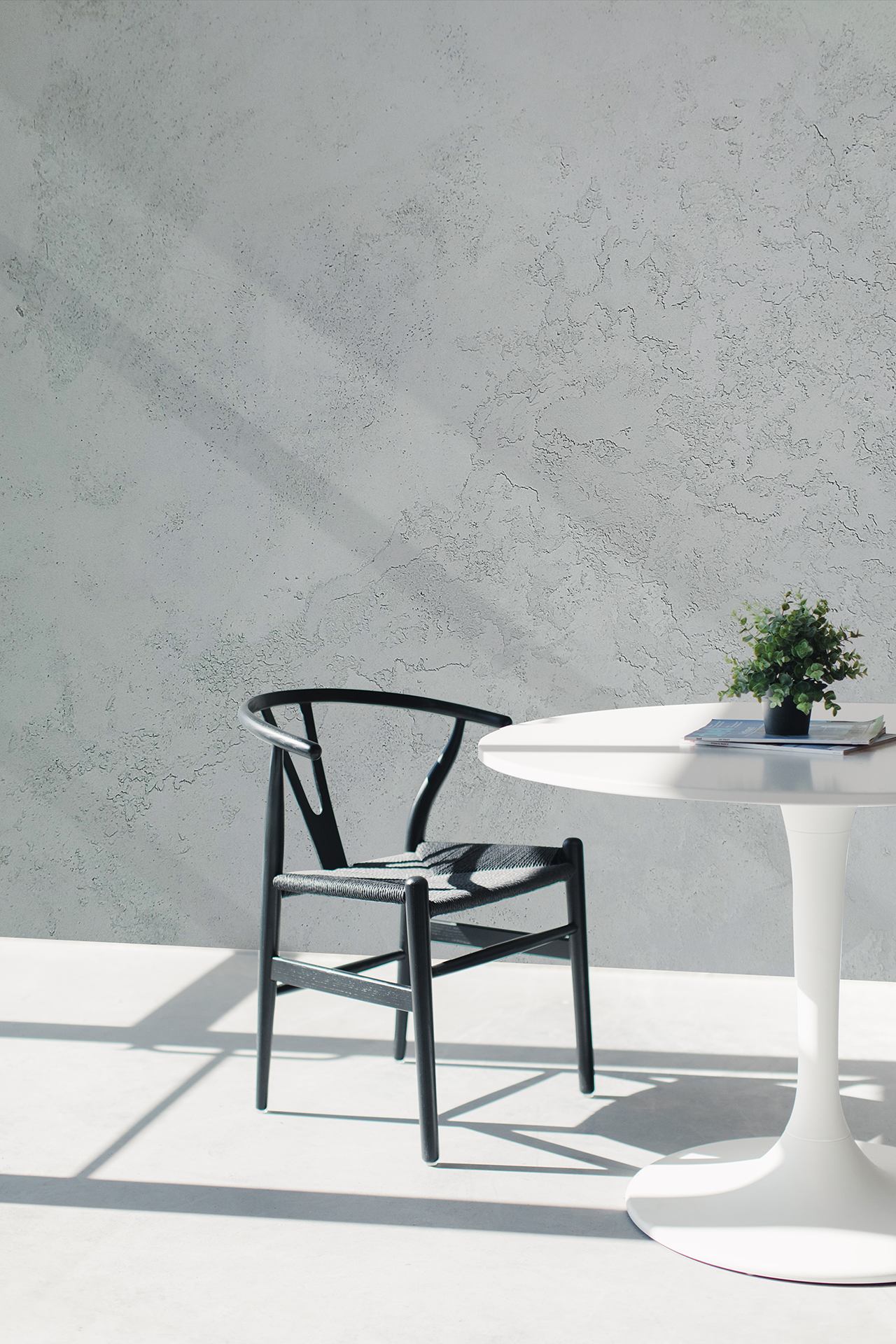
A gray European plaster wall, built from thin layers of lime.
Courtesy · TORO
Rock Plaster
There's also a plaster that transfers the expression of stone directly onto a wall. Left rough, its texture reads like natural stone cut and set in place — the exact opposite of the smooth European plaster.
A surface like this gives a space weight. Used on a single living room wall or at the head of a bed, where the eye tends to linger, the whole room settles around that one wall. In an interior that carries the grain of a hanok, a dark plastered wall meeting solid wood only deepens that heaviness.
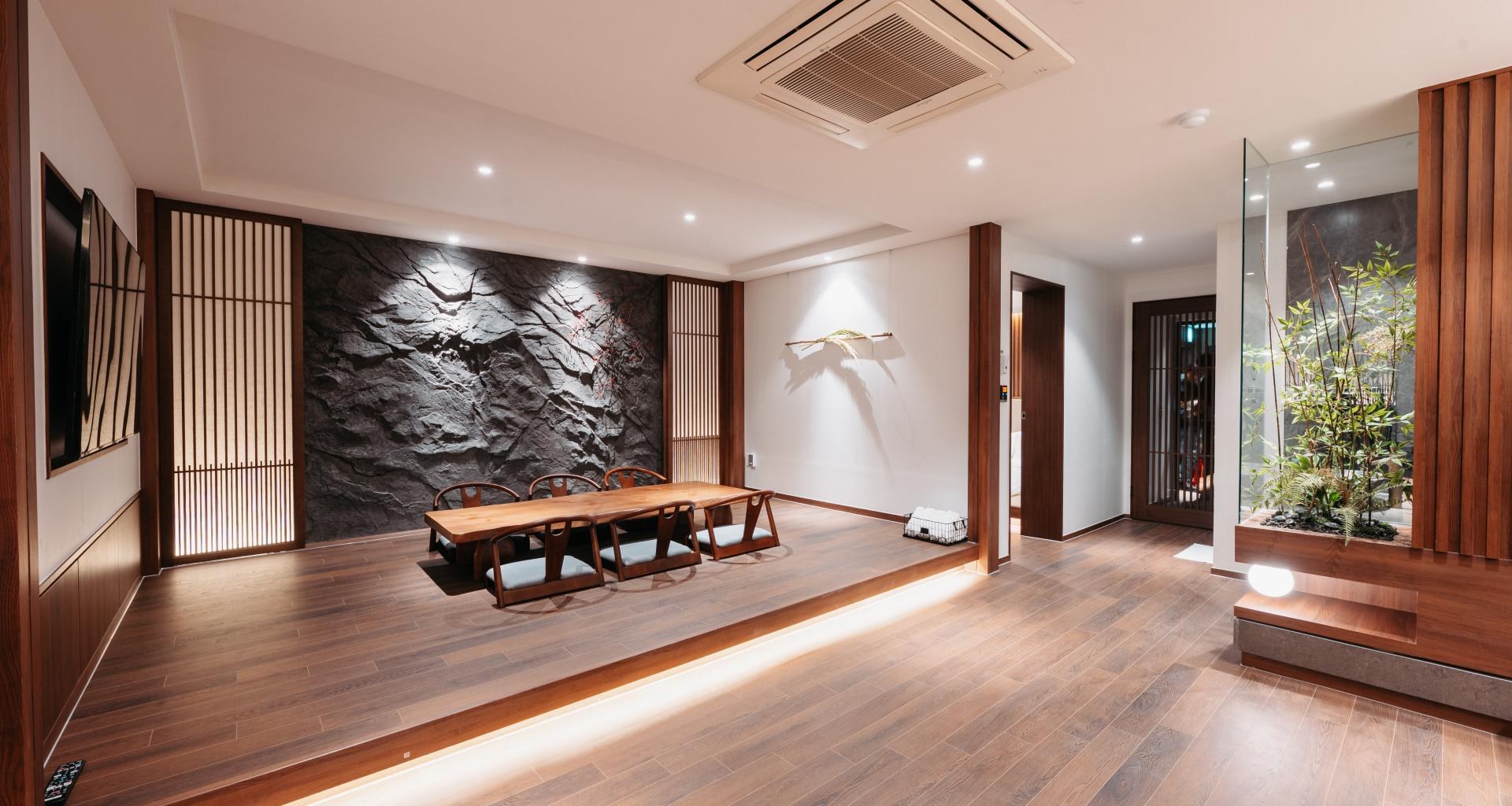
An interior that keeps the grain of a hanok. A dark rock-plaster wall pairs with solid wood.
Courtesy · TORO
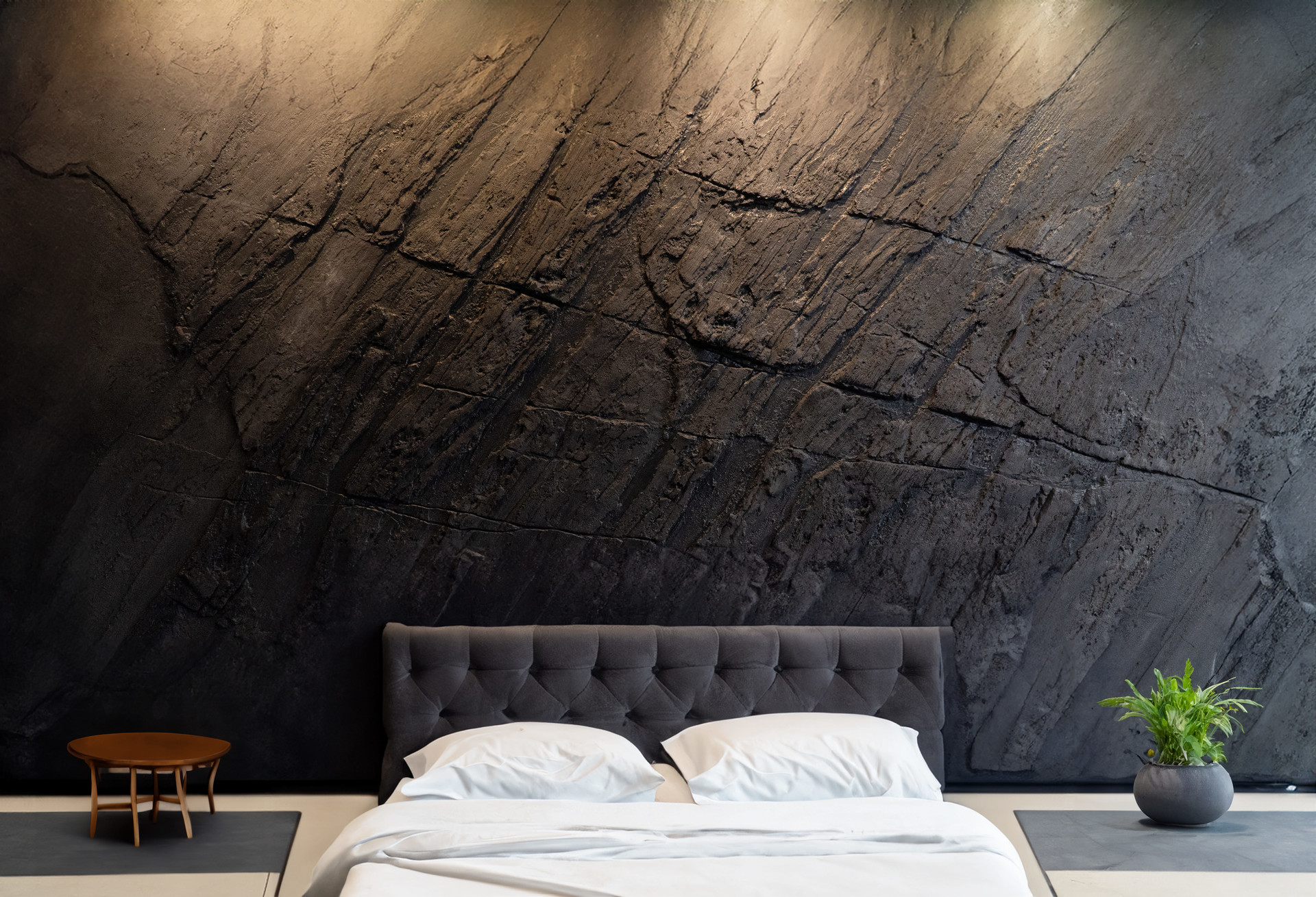
Rock plaster filling the head of a bed. The rough texture becomes the room's center of gravity.
Courtesy · TORO
Bonato Stone
"Bonato" pushes rock plaster one step further. Applied at a thickness over 3 centimeters, it allows freely carved relief, both incised and raised. It spreads the rough expression of unfinished rock across an entire wall at once. Built mainly from white clay and natural lime, it contains no chemical components like VOCs. It's the roughest-looking finish of the lot, and, underneath, the gentlest.
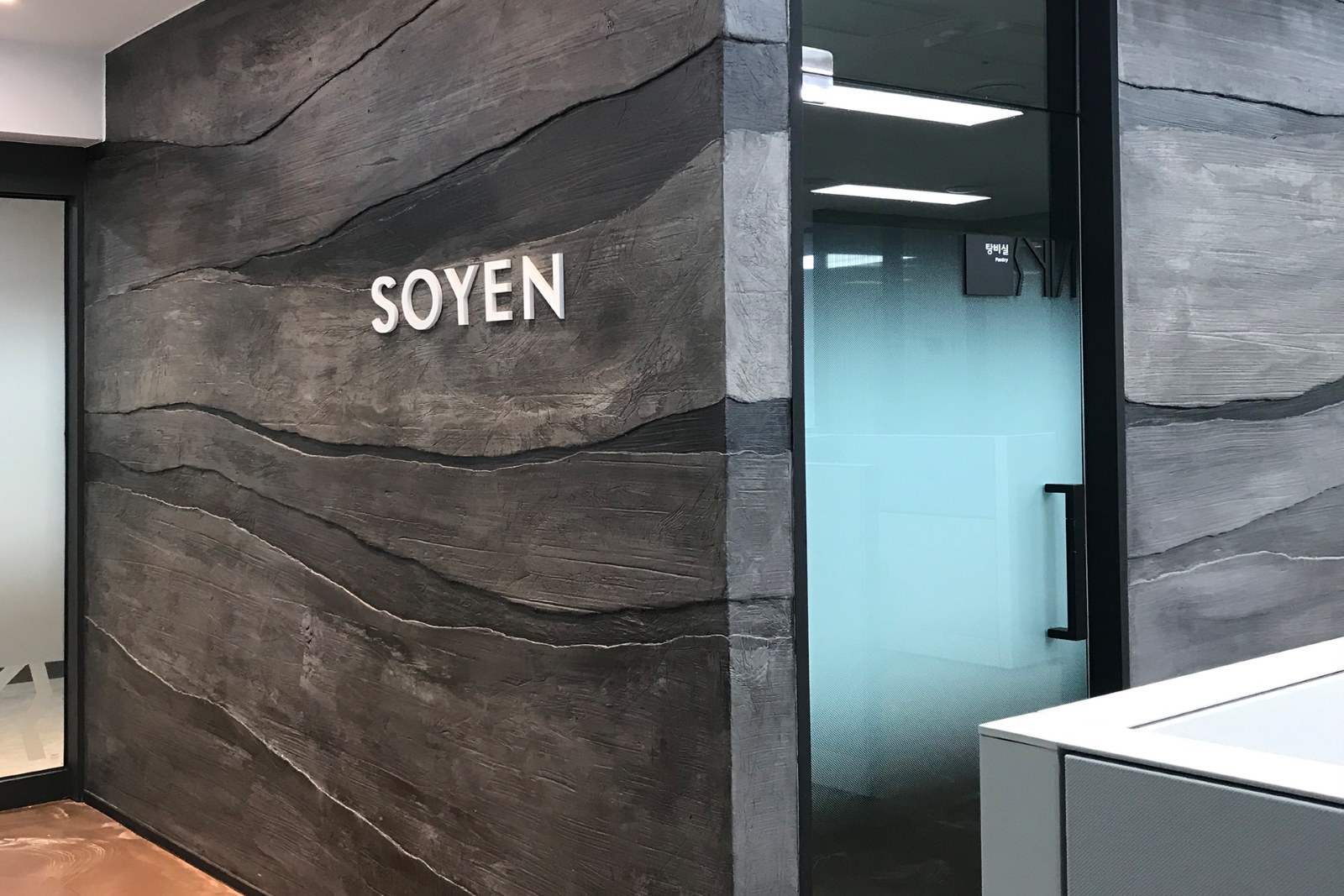
An office wall finished in Bonato. Three centimeters of carved relief transplants the surface of rock onto the wall.
Courtesy · TORO
Hueaid
TORO's own favorite surface is a separate thing entirely — Hueaid, whose long horizontal grain flows like running water. It's a pattern the company has refined for years, wrapping a wall the way rock strata or ripples do. It comes alive especially in places with long walls and a far-reaching sightline, like a lobby or stairwell. Stop and look closely, and no two sections of the grain ever repeat.
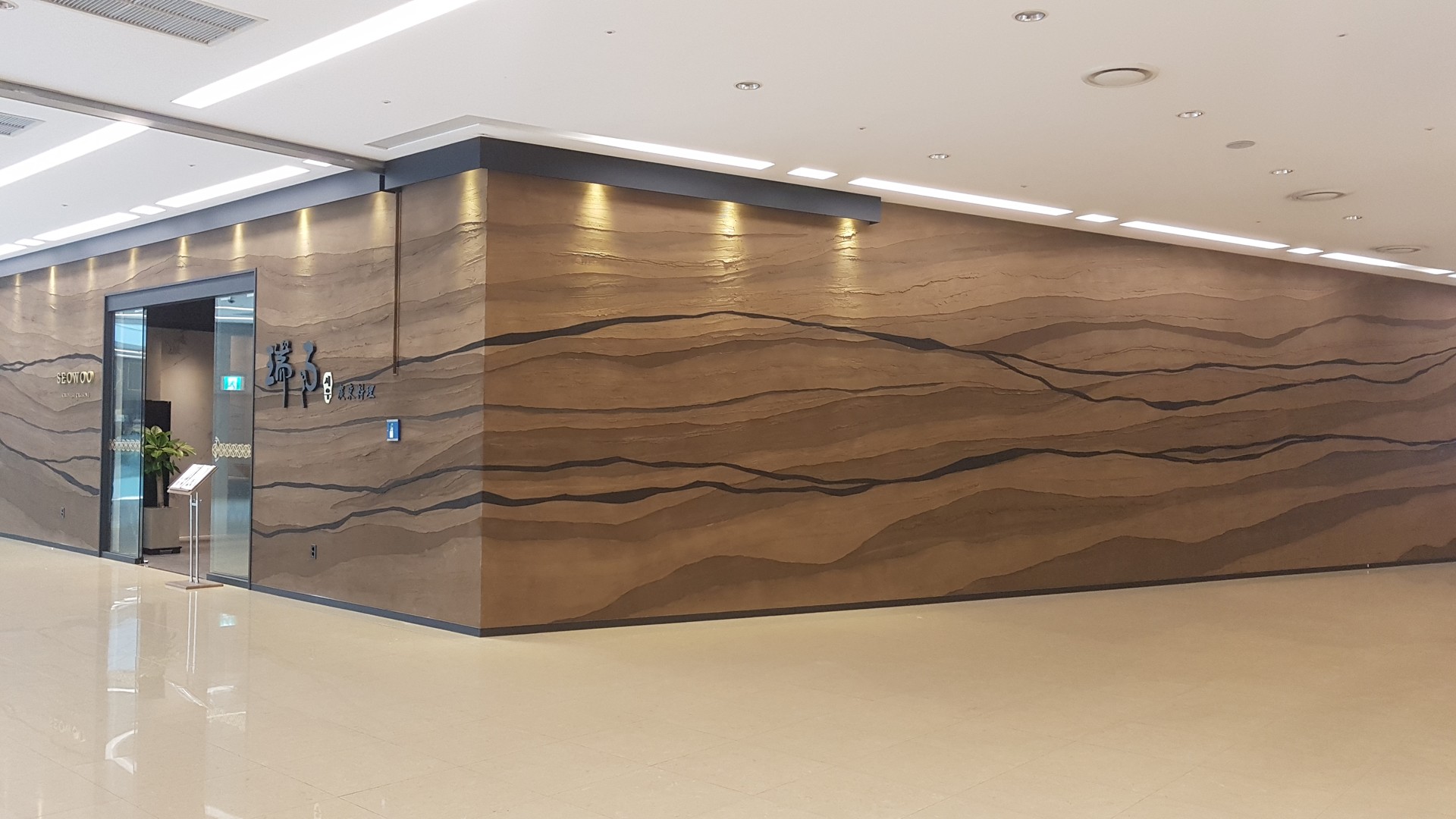
A lobby wall finished in the Hueaid pattern. Wave-like grain wraps around the long wall surface.
Courtesy · TORO
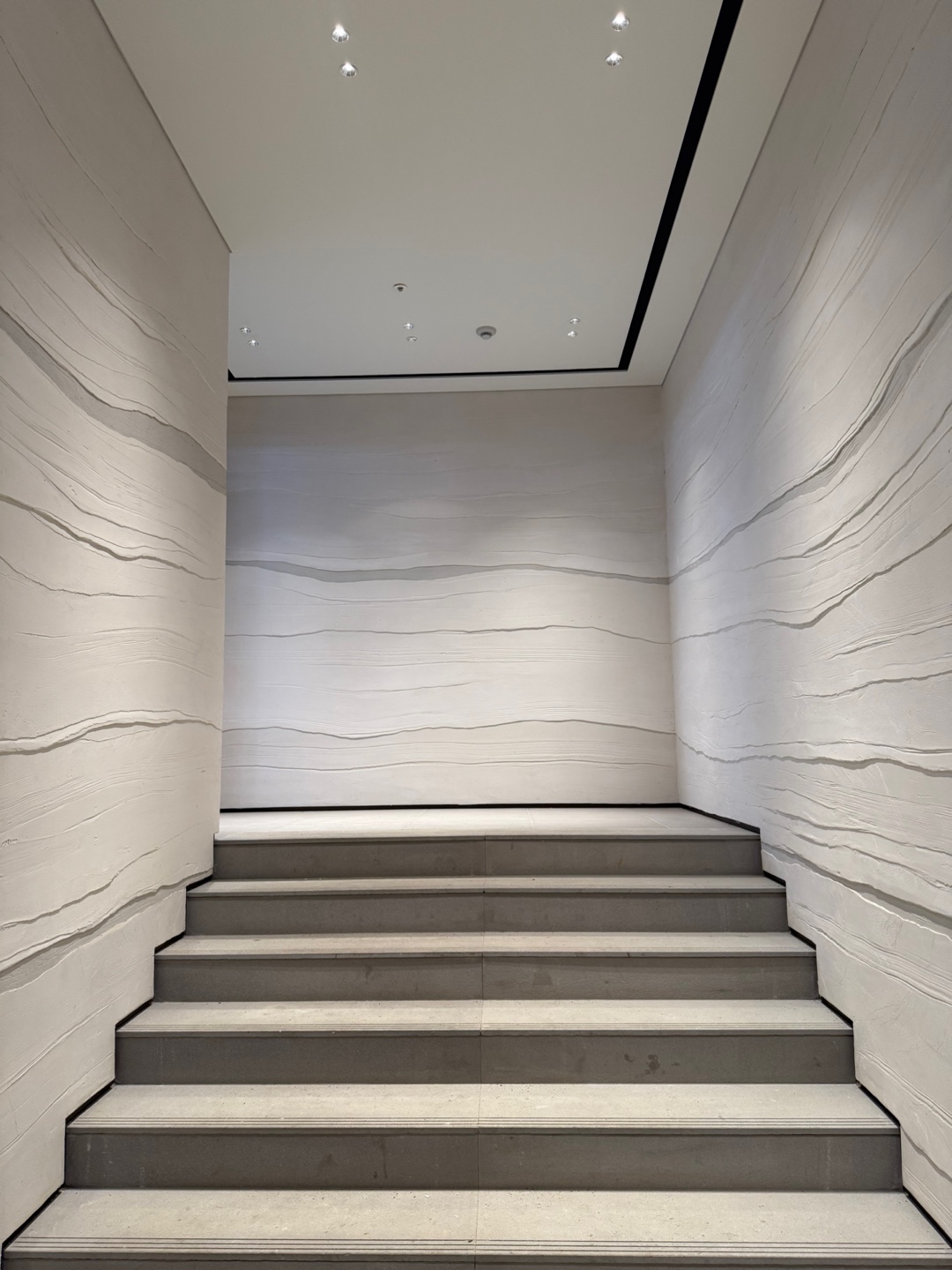
Hueaid flowing along a staircase. The white grain carries upward with the steps.
Courtesy · TORO
A wall that breathes
If the surface is clay's first face, the second face is invisible.
A clay-plastered wall never fully seals itself, even once it's completely dry. Countless tiny pores beneath the surface stay open as pathways for air and moisture to pass through. On a heavy, humid day like monsoon season, the wall draws moisture in; on a bone-dry winter night with the heat running, it slowly releases the moisture it's been holding. Without anyone noticing, the wall is regulating the room's air. That's why the air feels different the moment you step into an old clay-walled house.
This invisible work depends entirely on what the wall was plastered with. Some of TORO's products are built specifically around this function. "HerbSoil" is a powder made by grinding whole herbs and medicinal plants directly into the clay. Mixed with water and applied, it releases a subtle, natural scent as it dries — a completely different starting point from liquid paint that hardens with chemical solvents. "Caolina" adds Hinoki cypress powder to that same base, carrying the scent and grain of cypress straight into the room.
Think of the acrid smell in a newly built or renovated home — the air that stings your eyes and leaves your head feeling heavy — and the difference becomes obvious. That's usually caused by volatile compounds released from chemical finishing materials. TORO's plaster mixes contain none of that, made purely from natural materials like red clay, white clay, lime, Hinoki cypress, and charcoal. That's why even a freshly finished room feels less irritating. It's also why clay finishes get chosen not just for homes, but for spaces where people spend long hours, like hospitals and exhibition halls.