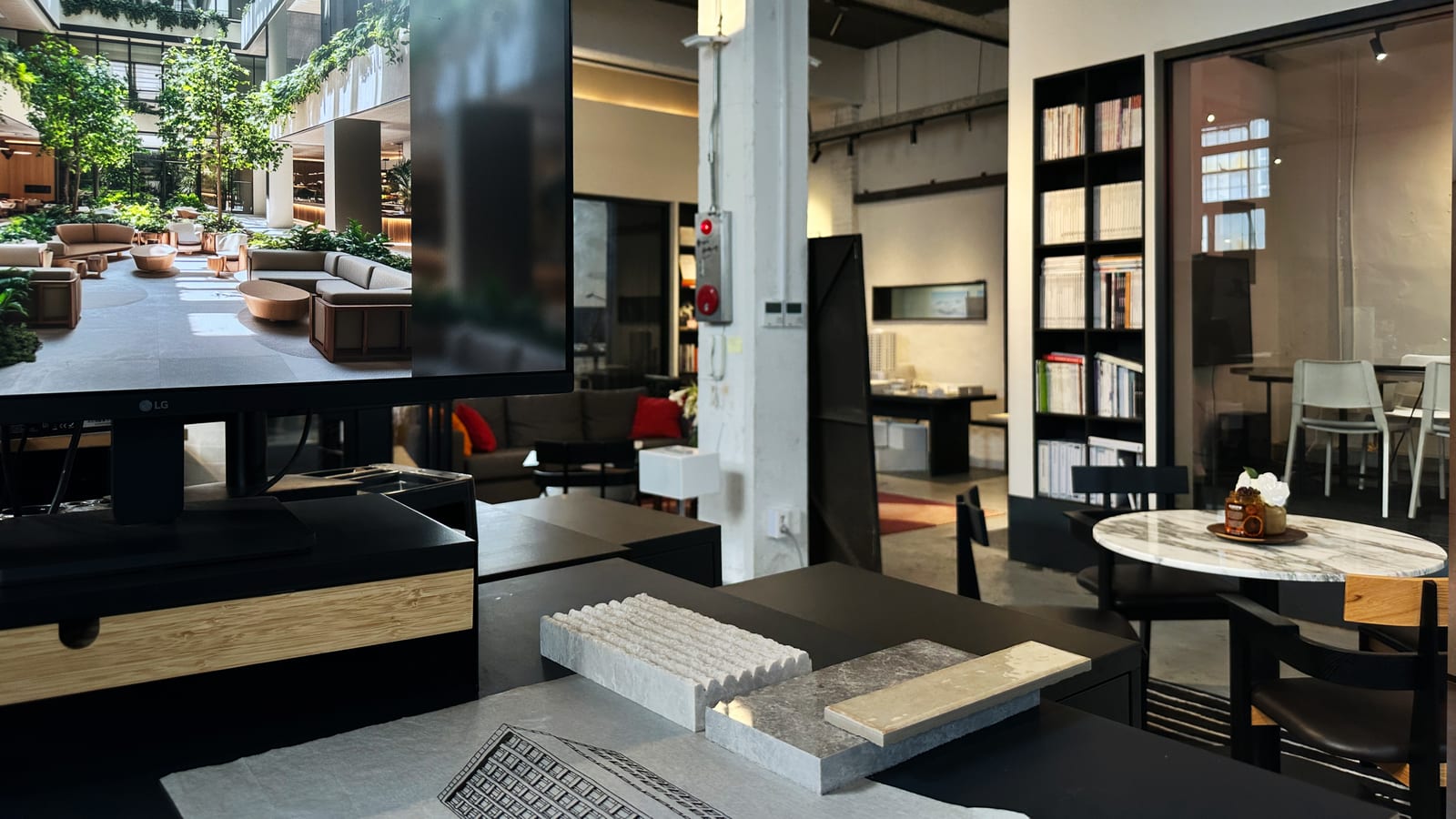
The scene in design practice and in schools has been shifting lately — quietly, but unmistakably. In the design studios of the past, a wall packed with reference images, hand-drawn sketches, material samples, models, and stacks of scrap-paper printouts seemed to trace the whole progress of an idea. Producing a single image explaining a space used to require research, sketching, modeling, rendering, and then a long stretch of post-production, all in sequence — and that accumulated time itself once seemed to stand in for the density of the design.
The situation now is completely different. The images students bring to class are startlingly polished. Light lands exactly where it's meant to, material textures feel rich, and the whole atmosphere of a space comes through — and strikingly, this kind of expression shows up not just in senior students, but in students who've barely started learning.
It's the same in practice. At an early concept meeting, a project whose floor plan hasn't even been settled yet might already be presented looking almost like a photograph of the finished building. At this point, the question comes up: "Was this designed, or was it generated?" That question isn't really about how the image was made — it points to where the center of gravity in the design process is actually shifting today.
Now, the human's job is to "take responsibility"
In the past, the time it took to finish a single image was proof of a design's depth. But since AI came into the picture, an image is no longer necessarily the product of a long stretch of time. A good prompt, the right reference, and quick editing skills are enough to produce a fully convincing scene in a short amount of time. This shift expands what design can do, but it also creates a new kind of confusion. Looking at a polished image, we now have to ask again whether it could actually be built as a real space, whether it genuinely accounts for the user and holds a real experience, or whether it stops at a surface-level appeal.
In the end, the core of this emerging AI era isn't "who made it," but "what judgment was made." It's not whether AI was used, but what questions the designer set up along the way, what possibilities they chose, and how they took responsibility for the outcome.

A hospitality project by Studio Eccentric. AI-generated images can suggest a direction, but building the logic and experience of a space is still the designer's job.
© Studio Eccentric
At Studio Eccentric, which I currently lead, AI technology has already become part of the studio too. But rather than replacing the design work we've always done, it functions more as a tool that extends or speeds up certain stretches of the design process. As of now, an image AI produces isn't design. It might be one possible design direction, but it can't build the logic of a space or the structure of an experience.
In the interior design Studio Eccentric pursues — hospitality spaces like hotels, especially — what matters isn't simply producing a striking scene. It's designing how a person will actually experience it, and thinking that hard about experience is still territory AI can't fully take over.
That's why AI currently reveals both possibility and limitation at the same time. It generates an enormous number of styles very quickly. But that speed also carries the risk of shallowing out the design. Looking at recently generated AI images, I often notice how strangely similar unrelated projects start to look. Spaces appear more perfect than reality. Everything looks beautiful, yet somehow the image doesn't seem to belong anywhere in particular. You could call this the democratization of design, but it's also an averaging-out of sensibility.
So the ability that matters more for a designer in the AI era isn't writing good prompts — it's the ability to decide what to throw away. AI can offer us dozens, even hundreds, of images, but some of them fit the essence of the project, and some are nothing more than an optical illusion that merely looks good. Telling the two apart takes accumulated experience, a genuine understanding of space, cultural interpretive ability, and the designer's own aesthetic ethics.
The ability that matters more for a designer in the AI era isn't writing good prompts — it's the ability to decide what to throw away.
I also feel a big shift teaching students at Hanyang University, where I'm currently a full-time faculty member. Today's students handle AI extremely naturally. For them, AI isn't some special technology — it's closer to a search engine and a rendering tool, an advisor and a collaborator all at once.
Students in the past went through a process of spending long hours hunting for references, sketching by hand, and modeling over and over just to produce a single image. Now they can check out a range of visual possibilities in a short amount of time. This shift is clearly a positive one — it opens up the possibility for students to imagine faster and try things out more boldly.
But there's a concern alongside it too. As highly polished images get generated so easily, students can easily mistake that for having finished the design. Once the final image students are supposed to arrive at becomes convincing before anything else, the thinking that's supposed to follow it — floor plans, sections, structure, materials, spatial program — can end up weaker. What matters most in design education isn't producing a flashy result. It's learning the thought process of being a designer.
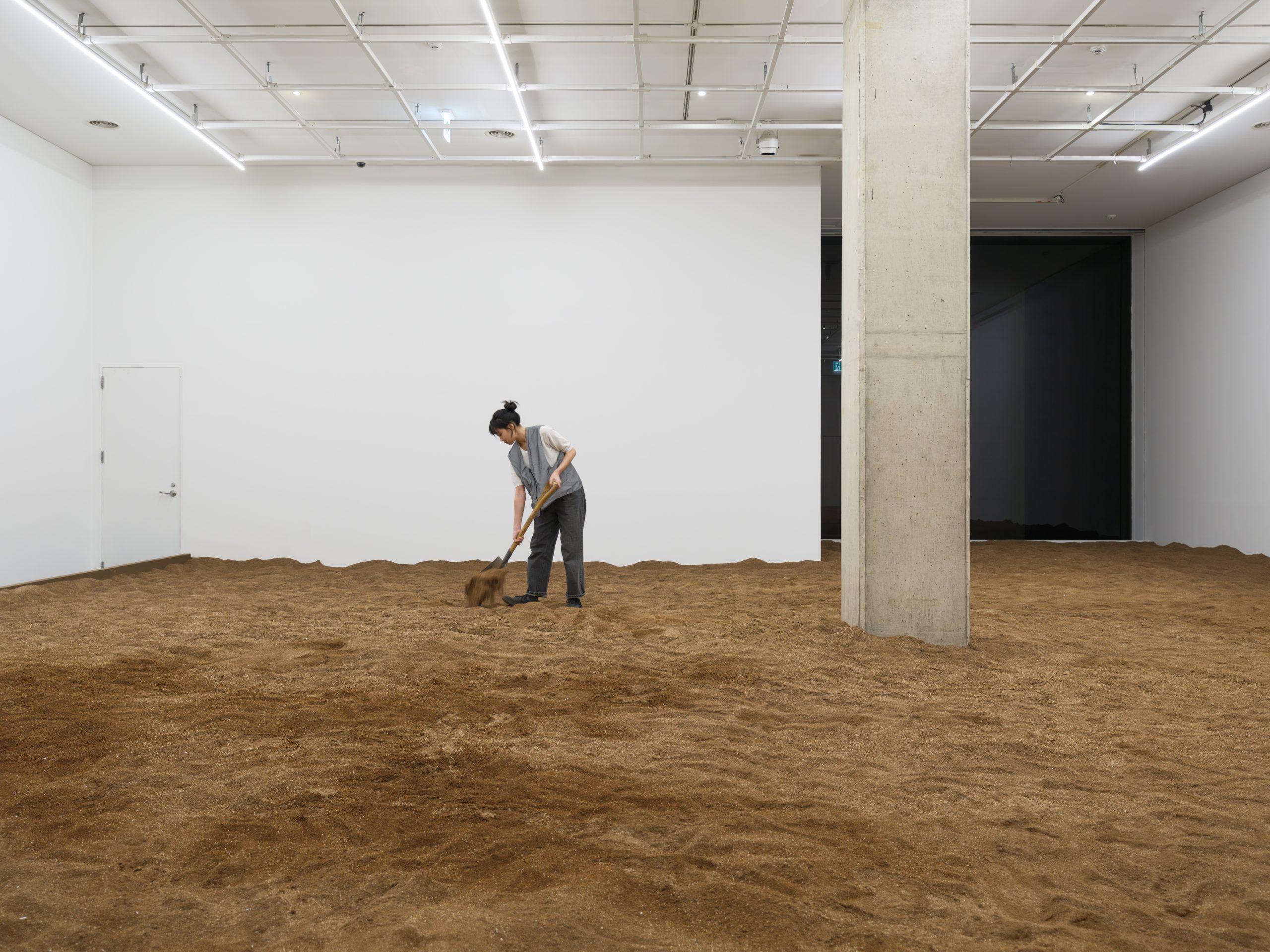
The process of drawing and building things by hand. The faster AI makes images, the more clearly the meaning of this slow, hand-made time actually stands out.
© Studio Eccentric
AI is what makes design more human
As AI has been folded into the design industry, we've become able to produce more images, and better ones. But paradoxically, what a designer needs now might actually be slower judgment. The faster generation gets, the more the ability to stare at what a given project genuinely needs, for a long time, actually matters.
Plenty of designers are afraid of AI. Some even deny designs that got help from AI. I was like that at first too, but at this point, I don't think there's any need to be afraid of it. That said, we shouldn't trust it too easily either. AI is a new design tool, and at times it can feel like an extremely powerful colleague. But a designer still has to know how to frame a question, interpret context to build an experience, and take responsibility for the outcome of whatever judgment they make.
AI isn't something that designs in our place — it's something that forces us to ask again what design even is. The more deeply we think in the face of that question, the more human design can actually become.
If AI provides speed, the designer has to build depth. If AI produces the image, the designer has to build the meaning of the space within that image.