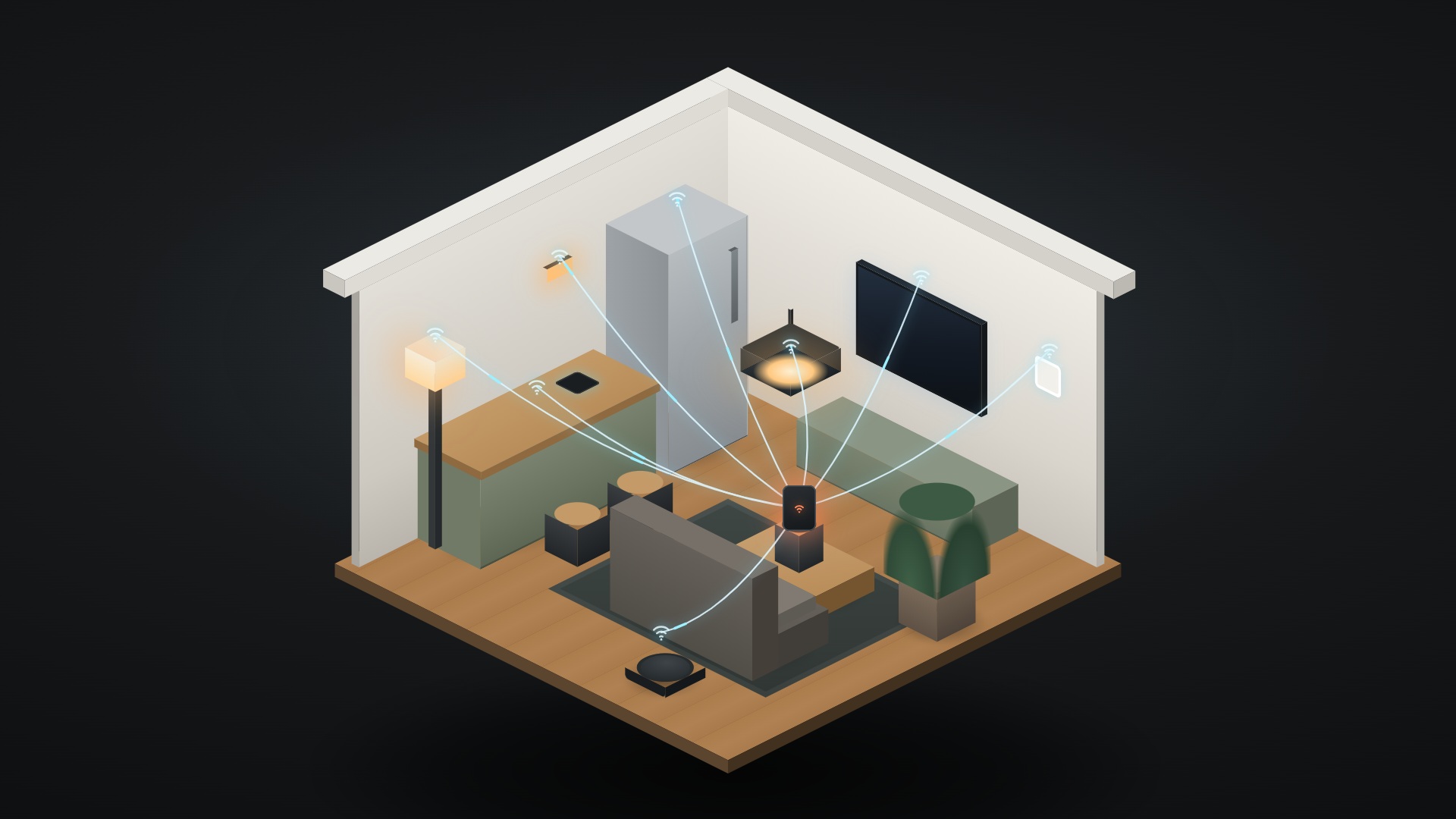
A home is built once and used for decades. The technologies and services that enter it, however, change much faster. Until only a few years ago, a smart home was largely understood as a way to control lighting or heating and cooling from a smartphone. Today, the smart home is evolving into the AI home — one in which artificial intelligence understands the family’s lifestyle and the condition of the space, connecting appliances, building systems, energy, security, and care into a single experience.
Watching this shift unfold in the field makes one point increasingly clear: the homes of the future cannot be completed by a single manufacturer or platform. People choose appliances, devices, and services from different brands. A home must be able to accommodate those choices and connect with technologies that have yet to emerge. A good AI home is not one with the most features, but one that remains open enough to continuously add new technologies and services.
Openness and Interoperability Have Become Competitive Advantages
Across the global smart home industry, openness and interoperability are becoming core competitive advantages. International standards such as Matter are expanding the foundation that allows devices and platforms from different companies to work together. Competition is also shifting away from the performance of individual devices toward how naturally the entire home can cooperate and respond to the user’s situation. More recently, the convergence of AI homes and robotics is also becoming tangible, with AI acting as the brain that understands and judges the space while robots carry those decisions into action.
An AI home-based modular housing project introduced by Samsung Electronics together with a modular housing specialist offers one example of this change. AI appliances and smart home solutions are installed and registered during factory production of the home itself, allowing residents to use a fully connected environment from the moment the house is completed. It demonstrates that the smart home should not be treated as an optional layer of devices added after completion, but as residential infrastructure embedded into the planning, design, and production of architecture itself.
What Should We Leave Open Instead of Deciding in Advance?
No matter how advanced technology becomes, a closed home will struggle to accommodate new experiences. Changing communications networks or control systems after completion can involve substantial cost and constraints. Wiring and equipment designed around a single system, home networks built without expansion in mind, and closed structures that make external services difficult to connect can all reduce a home’s value over time. By contrast, a home designed from the outset with room for connection and expansion can adapt flexibly as new devices and services emerge.
This makes the role of architects, contractors, and construction professionals more important than before. An AI home is not simply a matter of adding a few appliances; it is about designing the underlying infrastructure of the living environment. Power and communications, sensors and controls, spatial data, security, energy, shared entrances, and elevators all need to work together organically. At the same time, international standards and open integration should be considered so that the home does not become dependent on any one product or brand.
Of course, it is impossible to predict every future technology at the design stage. What matters is not deciding all the answers in advance, but leaving room for change to enter. Designers should consider the expandability of communications and power infrastructure, the ease of replacing and adding devices, secure connections for data and control permissions, and standard interfaces that allow different systems to communicate. In a future where household robots become common, circulation routes, thresholds, automatic doors, elevator integration, and charging spaces will also become new elements of residential design.
What matters is not deciding all the answers in advance, but leaving room for change to enter.
A Home Grows with the Life Cycle
An open home gives consumers greater freedom of choice. Residents are not permanently tied to a brand they selected once, but can add the services they need as their lifestyle and family structure change. As they age, they may connect health and care services; as the energy environment changes, they can upgrade energy-management services. The home becomes more than a fixed product — it evolves into a living platform that changes with its occupants over the course of their lives.
From an industry perspective, open AI homes also create broader opportunities. Not only major corporations, but also small and mid-sized device makers, construction companies, interior and building-services firms, telecommunications providers, and energy, care, and security companies can participate. For that ecosystem to function properly, however, standards, testing and certification, and cybersecurity frameworks must be established. Skilled professionals and qualification systems will also be needed to design, install, and manage multiple devices and platforms in the field. Ultimately, it is the capability of people on site that turns connected technology into real value in everyday life.
Korea already has world-class appliance, semiconductor, telecommunications, and platform companies, as well as a housing environment centered on apartment communities and strong construction and interior-design capabilities. The next step is an industry-wide transition from excellence in individual products toward designing the entire home as an open platform. Standardized AI home models should be developed not only for new construction but also for existing homes, together with an ecosystem that connects design, installation, and ongoing maintenance.
Building a home means creating a space for today while also creating a vessel for decades of future change. Rather than asking only what devices will be installed after completion, we should first ask what should be connected and what should remain open at the design stage. Not a home defined by a particular brand, but one where people, technology, and services can connect freely. Preparing that kind of open home is, in my view, both a new responsibility and one of the greatest opportunities for the architecture and construction industries in the age of the AI home.